

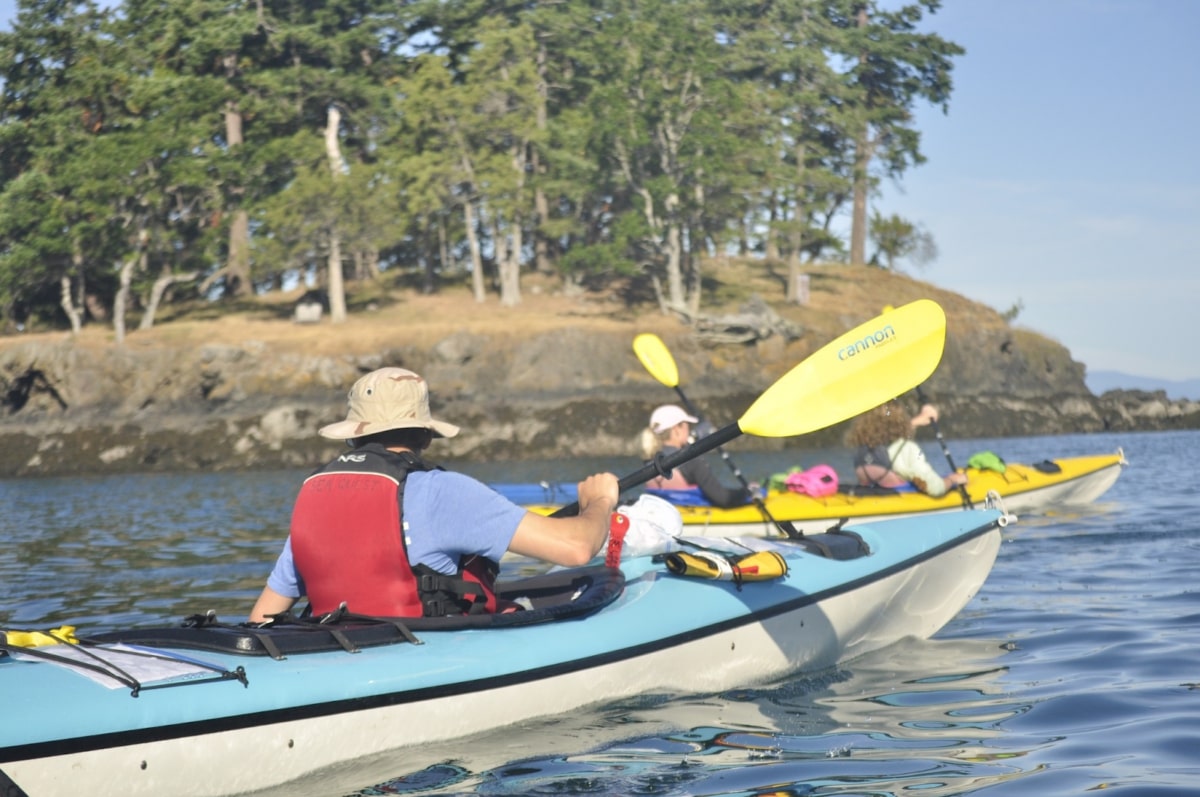
Sea kayaking safety in the Salish Sea comes down to a few forces you can plan for. The water here is beautiful and demanding. Cold water, strong tides, and busy boat lanes shape every paddle. A little knowledge keeps you safe and makes the trip more fun.
This guide explains sea kayaking safety in the San Juan Islands: tides, currents, cold water, weather, and traffic. It also shows why a guided trip removes most of the risk for new paddlers.
Table of Contents
- Why the Salish Sea Demands Respect
- Reading Tides and Currents
- Cold Water and Hypothermia
- Weather and Wind
- Boat Traffic and Ferry Lanes
- Wildlife Distance Rules
- Why Go Guided
- Frequently Asked Questions
Why the Salish Sea Demands Respect
The water here stays cold all year, often in the low 50s Fahrenheit. Tides move large volumes of water through narrow channels, which creates strong currents. These forces are predictable, but they punish guesswork. Good planning turns a hard environment into a safe one.
Reading Tides and Currents
Tides drive the currents that help or fight your paddle. Plan to travel with the current, not against it. Slack water, the calm window between tide changes, is the safest time to cross open channels. Check the NOAA Tides and Currents tables before you launch, and match your route to the timing.
- Read the local current tables for the day and the specific channel.
- Cross open water near slack tide when flow is weakest.
- Avoid tide rips, where currents collide and the water turns choppy.
- Build extra time into your plan so you are not rushing a crossing.
Cold Water and Hypothermia
Cold water is the main danger in the Salish Sea. A sudden swim can cause cold shock and sap your strength fast. Dress for the water, not the air, and read our note on what to wear on the water. A spray skirt, layers, and a snug life jacket all help you stay warm and afloat.
Weather and Wind
Wind can rise quickly and turn calm water into whitecaps. Morning often brings the calmest conditions, which is why many tours launch early. Check the National Weather Service marine forecast and watch the sky. If wind picks up, head for shelter and wait it out.
Boat Traffic and Ferry Lanes
Ferries, fishing boats, and pleasure craft share these waters. Kayaks sit low and are hard to see, so stay near shore and out of shipping lanes. Cross busy channels quickly, as a group, and only when the lane is clear. The U.S. Coast Guard shares free boating safety guidance worth a read.
Wildlife Distance Rules
Keep your distance from whales and seals. In Washington, paddlers must stay at least 300 yards from Southern Resident orcas and follow Be Whale Wise rules for all marine mammals. Distance protects the animals and keeps you safe. The same limits apply on a whale watching kayak tour.
Why Go Guided
A guided trip removes most of these risks for new paddlers. Sea Quest guides read the tides, pick safe routes, and carry rescue gear. They teach the skills you need as you go. If you want to build confidence first, book a kayak lesson or join a guided San Juan Islands tour. Questions about conditions on your dates? Contact our team.
Frequently Asked Questions
Is sea kayaking in the San Juan Islands dangerous?
Sea kayaking carries real risks from cold water, strong currents, and boat traffic, but a guided trip lowers them sharply. Guides plan around the tides, choose safe routes, and carry rescue gear.
How do tides and currents affect kayaking?
Tides drive currents that can help or hinder your paddle. Plan to travel with the current and cross open channels near slack water, when flow is weakest, to avoid being pushed off course.
How cold is the water in the San Juan Islands?
The water stays cold all year, often in the low 50s Fahrenheit. Cold water is the main hazard, so paddlers dress in layers for immersion and wear a life jacket at all times.
What should I do if my kayak tips over?
Stay calm, hold onto your kayak and paddle, and signal your group. On guided tours, guides perform a quick assisted rescue to get you back in the boat. Calm-water tours make capsizes rare.
Is it safer to kayak with a guide?
Yes. Guides monitor tides, currents, weather, and traffic, carry safety equipment, and follow wildlife rules. Guided trips are the safest option for beginners and visitors new to the area.