

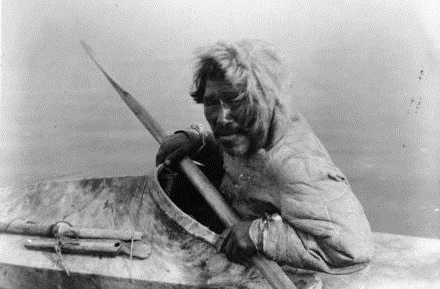
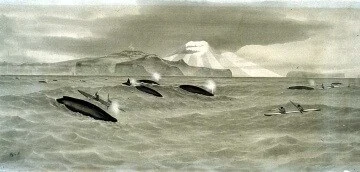
No one is sure exactly when the first kayak made its way to Europe. However, several trans-Atlantic kayak journeys from Labrador or Greenland to Scotland were endured by adventurous Inuit paddlers in the 1800s. Kayaks soon caught on in Europe, with canvas substituting for traditional skin covers. European craftsmen and naval architects took their turns at attempting to improve the kayak, but the aboriginal designs proved to be quite mature and highly-evolved. In fact, at the hands of Europeans, both kayak designs and paddling skills deteriorated drastically from the highly refined principles of the native kayakers.
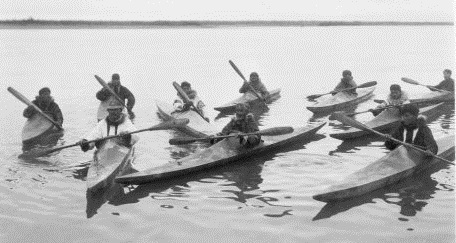 The sport of kayaking and long-distance kayak touring was popularized in 1845 when a Scotsman named John MacGregor introduced his “Rob Roy”, a semi-decked canoe loosely based on a native kayak. Kayaking became an official Olympic sport in 1936 with events that included the solo and tandem 1,000m and 10,000m flat-water races, and white-water and slalom courses. Kayaks were adopted by military forces and used during World War II by the British to place limpet mines on German vessels. They used them again during the Falkland Islands War by sneaking into Port Stanley to create diversionary explosions as the main force struck from inland. Military kayaks are ideal for special operations as they can be launched from submarines, deployed from aircraft, and cruise silently below the radar.
Kayak designs began to advance in the 1950s with the advent of modern materials such as fiberglass and rubberized fabric. Ironically, the thrust of these “modern advancements” led to a revival of traditional Inuit kayak designs. Today, the very best modern kayaks still look, feel, and perform very much like kayaks made centuries ago. Whereas the hulls are very traditional in shape, significant to improvements can be seen in hatches, bulkheads, seats, and other features. It turns out that even our best computer software for naval engineering cannot improve on the intuitive genius of the kayak’s original innovators.
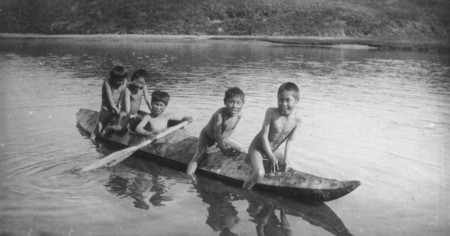 By joining a Sea Quest kayak tour, you can experience paddling the very best modern-day sea kayaks. All of the kayaks we use at Sea Quest display the original design concepts of native Greenlanders as translated into modern materials. They are fast and highly maneuverable but can handle extremely rough conditions while remaining very stable and comfortable. The sport of “kayak touring” originated in the protected marine waters of the Pacific Northwest and the sheltered San Juan Islands of Washington state are still the best location for beginning kayakers to get in their very first strokes.