

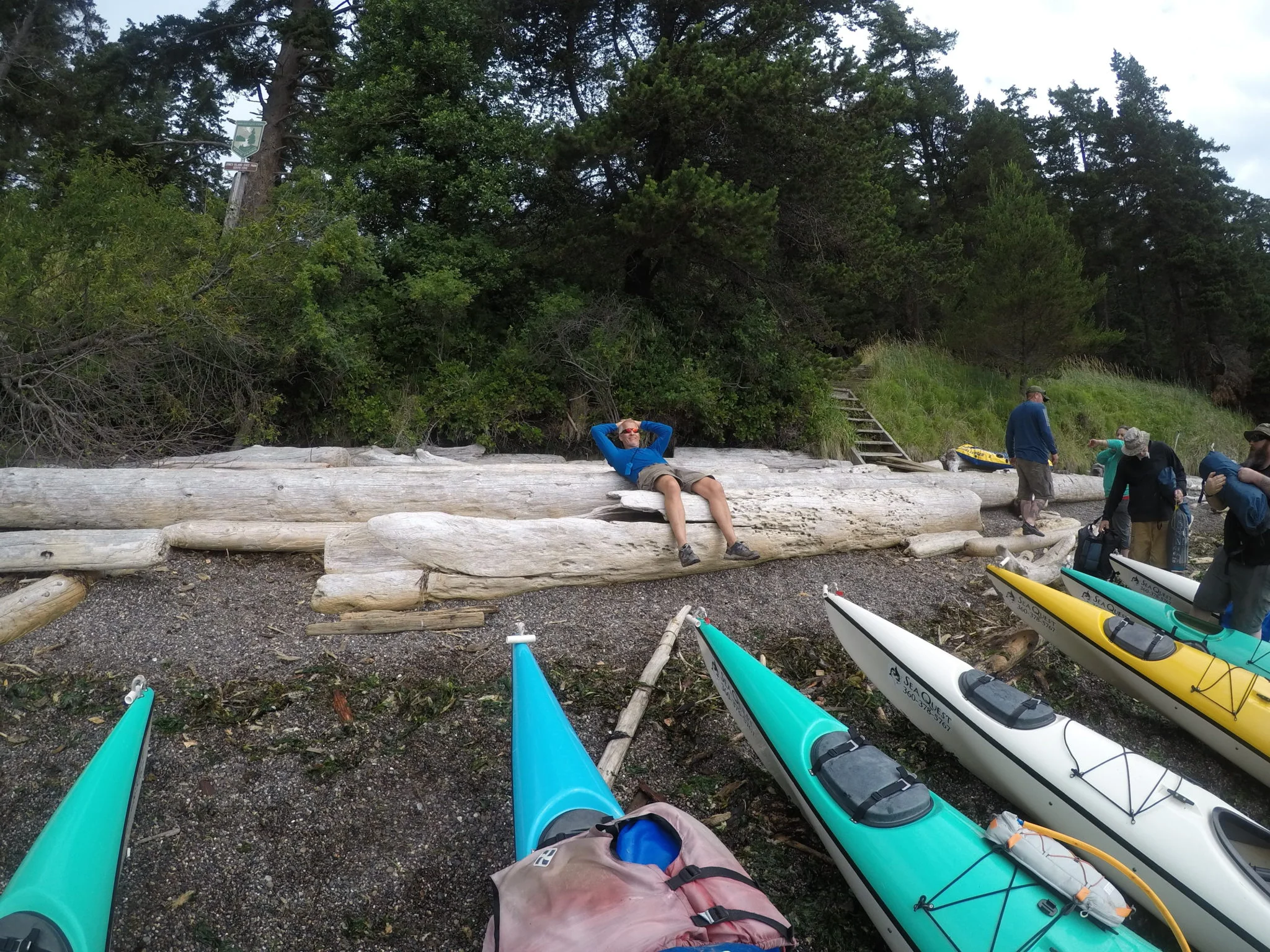
A multi-day kayak camping tour gives you the islands at their best. You paddle quiet channels by day and sleep on remote marine state park beaches by night. The trip trades crowds for tide pools, campfires, and starlit water.
This guide explains what a multi-day kayak camping tour in the San Juan Islands involves, how trip lengths compare, and what to expect each day. Use it to choose the right expedition.
Table of Contents
- What a Kayak Camping Tour Is
- Two-Day, Three-Day, and Longer Trips
- A Day on Tour
- Camping on Marine State Parks
- What Is Provided and What You Bring
- Food and Camp Cooking
- Who These Trips Suit
- Frequently Asked Questions
What a Kayak Camping Tour Is
A kayak camping tour is a guided expedition that combines paddling with overnight camping. You carry your gear in the kayaks and move between island campsites. Guides plan the route around tides, weather, and wildlife, so you focus on the experience. These trips reach places that day tours cannot.
Two-Day, Three-Day, and Longer Trips
Sea Quest runs several expedition lengths. A two-day tour gives a quick taste of camping with one night out. A three-day trip adds range and more wildlife time. For comfort with extra support, the luxury kayak camping option upgrades the camp setup. Longer expeditions cover more islands at a steady pace.
A Day on Tour
A typical day starts with coffee and breakfast at camp. You break down the site, load the kayaks, and paddle a planned route with breaks for lunch and wildlife. By afternoon you reach the next camp, set up, and relax on the beach. Evenings bring camp dinners, conversation, and sometimes glowing, bioluminescent water after dark.
Camping on Marine State Parks
Many campsites sit on marine state parks along the Cascadia Marine Trail, a network of paddle-in sites managed by Washington State Parks. These sites are reachable only by small boat, which keeps them quiet. Our broader guide to camping in the San Juan Islands covers options across the islands.
What Is Provided and What You Bring
Sea Quest provides the kayaks, paddles, life jackets, tents, camp kitchen, and most group gear. You bring personal clothing, a sleeping bag setup, and small items. Pack light and follow our list of what to wear and pack. You can also review the equipment we use before you go.
Food and Camp Cooking
Guides handle meals on most expeditions. Camp menus lean on fresh, simple food cooked on site. Tell the team about dietary needs when you book, and they plan around them. Good food after a day of paddling is part of the reward.
Who These Trips Suit
Multi-day tours suit paddlers who want more than a day trip and enjoy the outdoors. You do not need expedition experience, since guides teach as you go, but basic fitness helps. New paddlers can start with our beginner’s guide and a day tour first. Camp with care and follow Leave No Trace so the islands stay wild. Ready to plan? Browse our tours or contact the team to pick your dates.
Frequently Asked Questions
What is a multi-day kayak camping tour?
It is a guided expedition that pairs daytime paddling with overnight camping on island beaches. You carry gear in the kayaks, move between marine state park campsites, and let guides plan the route around tides and weather.
Do you need experience for a kayak camping tour?
No prior expedition experience is required because guides teach paddling and camp skills along the way. Basic fitness helps, and new paddlers often start with a day tour before a multi-day trip.
Where do you camp on a San Juan Islands kayak tour?
Most camps sit on marine state parks along the Cascadia Marine Trail, a network of paddle-in sites reachable only by small boat. These quiet sites are managed by Washington State Parks.
What is included on a multi-day kayak tour?
Sea Quest provides kayaks, paddles, life jackets, tents, the camp kitchen, and most group gear, plus guided meals on most trips. You bring personal clothing and a sleeping setup.
How long are kayak camping tours in the San Juan Islands?
Trips range from two days with one night out to three days or longer. Shorter tours give a taste of camping, while longer expeditions cover more islands and add wildlife time.