

A pod of orca whales surfaces 100 yards from your kayak. You hear the exhale a deep, rushing breath before you see the tall dorsal fin slice through the water. The black-and-white body rolls forward, and then another appears behind it. A mother and calf. You stop paddling. You float in silence. The whales pass, unhurried, close enough that you can hear each breath clearly across the flat water of Haro Strait.
This is kayak whale watching in the San Juan Islands. It does not happen on every tour. But when it does, it becomes one of those rare experiences that people describe for years afterward.
The San Juan Islands are the best place in the United States to see orca whales from a sea kayak. Sea Quest has guided kayak tours through these waters since 1989. This guide covers when to go, what you will see, how to prepare, and what makes kayak whale watching different from a boat tour.
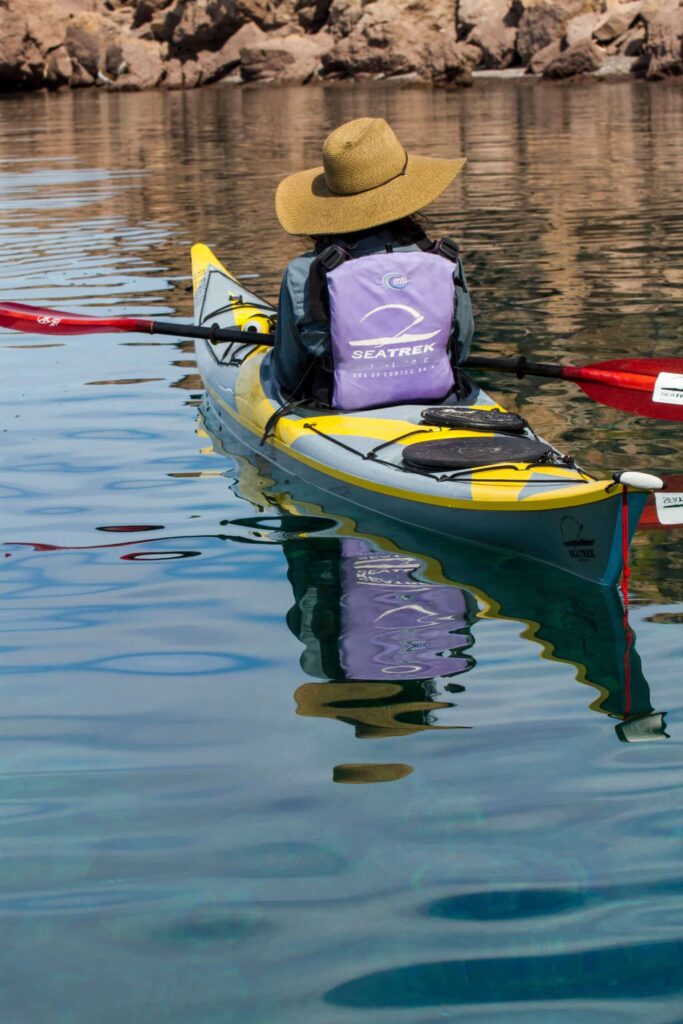
Which Whales Live in the San Juan Islands?
The waters around the San Juan Islands support several whale species. Each has different habits, seasonal patterns, and feeding preferences.
Southern Resident Orcas (J, K, and L pods)
These are the orcas most visitors hope to see. Three family groups—called J-pod, K-pod, and L-pod—return to the San Juan Islands each summer to hunt Chinook salmon. They were listed as endangered in 2005 due to declining salmon runs. Their population is small (roughly 75 individuals), and their presence depends heavily on salmon availability. In strong salmon years, they appear frequently along the western shore of San Juan Island. In weak salmon years, they may spend weeks elsewhere. Sea Quest’s whale watching info page explains their behavior in greater detail.
Bigg’s (Transient) Killer Whales
Bigg’s orcas hunt marine mammals—seals, sea lions, and porpoises—instead of fish. Their population has grown to over 400 in the Salish Sea region. They travel in small, quiet pods and can appear in any month. Because they hunt silently, they are harder to predict than Resident orcas. However, their growing numbers mean more chance encounters on kayak tours throughout the season.
Humpback Whales
Humpbacks have made a strong comeback in the San Juan Islands over the past decade. These 40-foot whales feed on small fish and krill. They are more common in summer and fall. Their size, surface feeding, and acrobatic breaches make them visible from a great distance.
Minke and Gray Whales
Minke whales appear year-round in small numbers. Gray whales pass through during their spring and fall migrations between Mexico and Alaska. Both species are occasionally spotted on kayak tours but less often than orcas or humpbacks.
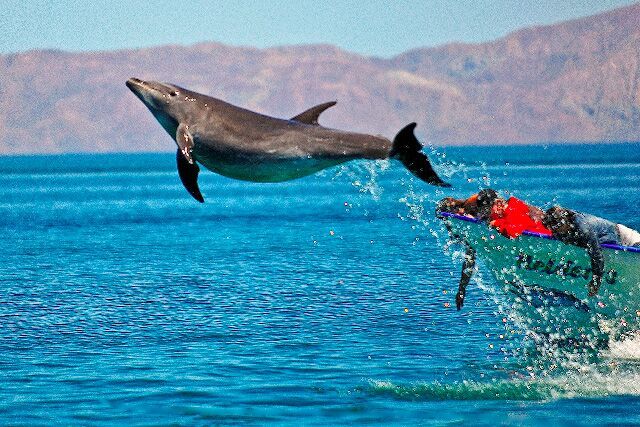
Best Time for Kayak Whale Watching in the San Juan Islands
Whale watching season in the San Juan Islands runs from April through October. The peak window is mid-May through mid-September, when salmon runs attract Resident orcas and warmer water draws humpbacks closer to shore.
Month-by-month overview:
April–May: Gray whales migrate through. Early Chinook salmon arrive. Resident orcas begin to appear, but sightings are less frequent. Bigg’s orcas active. Fewer tourists, lower prices.
June–July: Peak orca season begins. Chinook salmon runs strengthen. Resident orcas spend more time along the west side of San Juan Island. Humpbacks increase in number. Longest daylight hours mean more time on the water. This is the busiest booking period.
August–September: Strong salmon runs continue. Orca activity remains high. Water temperatures peak. Humpbacks are abundant. September offers smaller crowds with good sighting odds.
October: Season winds down. Salmon runs slow. Orca visits become less frequent. Gray whales begin their southbound migration. Water and air temperatures drop. Good month for experienced paddlers who prefer solitude.
Sea Quest’s day kayak tours depart daily from April 1 through November 1. The 3-day camping trips spend multiple days in prime orca habitat, which increases your chances of a whale encounter.
What Are the Chances of Seeing Orcas from a Kayak?
Sea Quest tracks whale sighting data across all tours. From 2005 through 2018, guests encountered orca whales on 35% of afternoon day tours during peak months (June–September). On 3-day camping trips during the same period, the encounter rate ranged from 55% to 70% depending on the month. June consistently produced the highest encounter rate for multi-day tours.
These numbers reflect the Southern Resident orcas, whose presence depends on salmon. In years with weak salmon runs (2013, 2019, 2020), sightings dropped sharply. The growing Bigg’s orca population adds additional encounters, though these whales are harder to predict.
Important reality check: No kayak company can guarantee whale sightings. Orcas travel up to 100 miles per day. A kayak covers 5–10 miles. The whales choose where they go. Responsible outfitters set honest expectations. Sea Quest puts you in the highest-probability zone, but encounters still require timing and luck.
Is It Safe to Kayak with Orcas?
Yes. Wild orcas have never injured a human in documented history. Orcas are highly aware of their surroundings and do not collide with kayaks. They approach boats with the same caution and curiosity they show toward other large objects in the water.
Federal and state law requires all vessels—including kayaks—to stay at least 300 yards from Southern Resident orcas and 200 yards from other whales. Sea Quest guides follow the Be Whale Wise guidelines and Washington State vessel laws at all times. If whales approach your kayak (they sometimes do), the protocol is to stop paddling, stay quiet, and let the whales pass at their own pace.
Sea Quest holds a perfect safety record since 1989. Guides complete a two-week intensive training program that covers wildlife protocols, rescue techniques, tidal navigation, and group management. Learn more about the Sea Quest guide team.
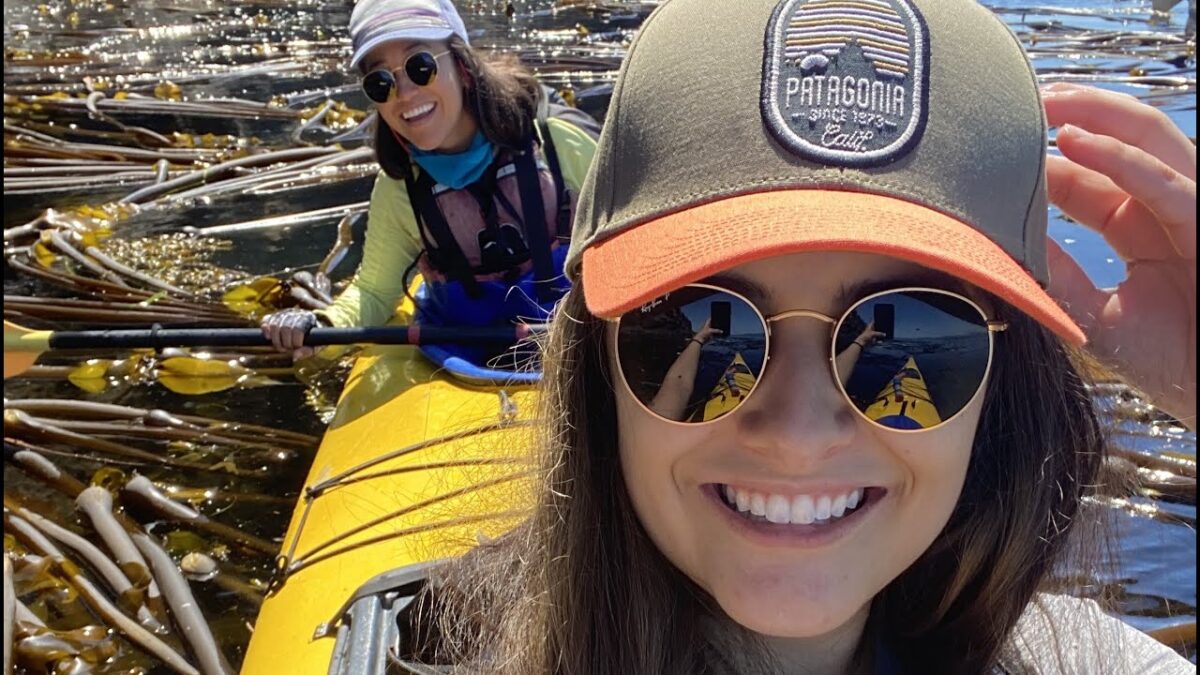
Kayak Whale Watching vs. Boat Tour: Which Should You Choose?
Both options have clear advantages. Your choice depends on your priorities.
Kayak tours offer:
- Water-level perspective. You sit inches from the surface. The sound of a whale breathing carries clearly across the water.
- Silence. No engine noise. You hear the whales, the birds, and the waves.
- Full-body experience. You paddle through kelp forests, explore tide pools during shore breaks, and feel the water temperature change as you cross currents.
- Diverse wildlife beyond whales: seals, bald eagles, porpoises, otters, herons, oystercatchers, and intertidal life.
- Exercise and immersion in nature for 3–6 hours.
Motorized boat tours offer:
- Wider search range. Boats cover more water and can follow whale reports across long distances.
- Higher whale sighting probability (often 90%+ for commercial whale watch boats).
- Less physical effort. Suitable for guests with limited mobility.
Best strategy: do both. Many visitors book a motorized whale watch tour on one day and a half-day kayak tour or full-day kayak tour on another. The kayak tour delivers a broader nature experience. The boat tour maximizes your odds of a close whale encounter.
What Else Will You See on a Whale Watching Kayak Tour?
Even on tours where whales do not appear, the wildlife diversity in the San Juan Islands fills every hour on the water. Sea Quest guides are trained biologists and naturalists who identify species and explain their behavior as you paddle.
Common sightings include:
- Harbor seals: Present on nearly every tour. They haul out on rocks and swim alongside kayaks.
- Bald eagles: Active nests line the San Juan Island shoreline. Guides know every nest location.
- Harbor and Dall’s porpoises: Fast swimmers that often surface near kayaks.
- Steller and California sea lions: Loud, visible, and common near rocky haul-out sites.
- River otters: Seen along shorelines, especially in early morning.
- Seabirds: Great blue herons, black oystercatchers, rhinoceros auklets, pigeon guillemots, and cormorants.
- Intertidal life: Sea stars, anemones, sea urchins, and kelp forests visible from the kayak or during shore breaks.
Sea Quest also offers dedicated birding kayak tours for guests who want a deeper focus on bird identification and habitat.
How to Prepare for a Whale Watching Kayak Tour
No kayaking experience is required. Sea Quest guides teach paddling technique on the beach before every launch. Tandem kayaks keep beginners stable and comfortable. If you can walk a few miles at a moderate pace, you can paddle a kayak tour.
What to wear:
Dress in layers. Wear synthetic or wool fabrics (avoid cotton). Bring a waterproof jacket and hat. Wear closed-toe shoes that can get wet. Sunglasses with a retainer strap keep glare off the water. Check the full preparation and packing guide before your trip.
What to bring:
- Binoculars (useful for spotting distant dorsal fins)
- Camera with a zoom lens, secured with a strap or dry bag
- Sunscreen and water bottle
- Lunch (for full-day tours)
- Sense of patience whales follow their own schedule
Sea Quest provides all kayaks, paddles, life jackets, spray skirts, and high-quality paddling equipment. Transportation from downtown Friday Harbor to the launch beach is included.
How to Get to Friday Harbor for Your Kayak Tour
Friday Harbor is located on San Juan Island, about 90 miles north of Seattle. Most visitors arrive by ferry from Anacortes, Washington (a 75-minute ride). You can also fly by seaplane from Seattle’s Lake Union or Bellingham.
From Seattle: Drive I-5 north to Anacortes (about 90 minutes). Take the Washington State Ferry to Friday Harbor. Or take the Bellair Airporter Shuttle from SeaTac Airport to the Anacortes terminal. Complete travel directions to San Juan Island are available on the Sea Quest website.
Sea Quest’s meeting point is near the Friday Harbor ferry terminal. Guides pick you up and drive you to the launch beach. After your tour, they return you to the same spot.
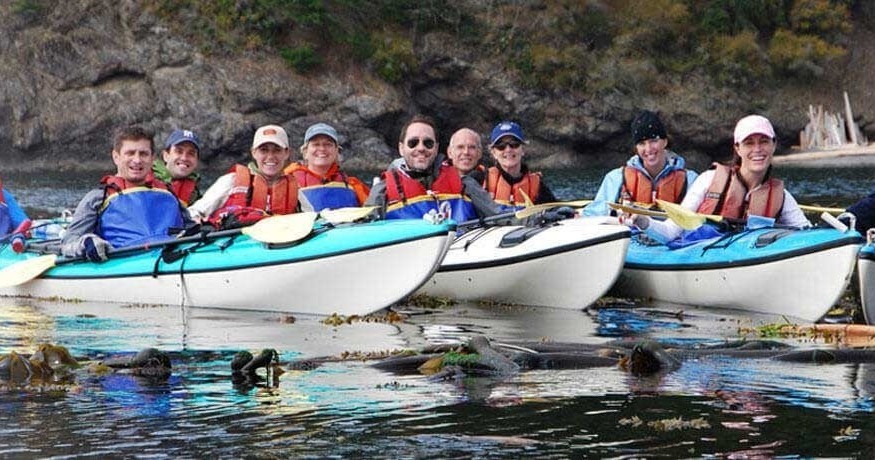
What Guests Say About Whale Watching Kayak Tours with Sea Quest
Sea Quest holds a 4.5+ star rating across TripAdvisor, Yelp, and Google with hundreds of reviews. Guests consistently praise the guides’ wildlife knowledge, the quality of equipment, and the amount of wildlife seen on every trip even on days without whale encounters.
One guest described seeing orcas as “unforgettable” and said the crew “went above and beyond to give us the best chance.” A family group noted the guides were “patient with the kids and informative on the marine environment.” A visitor from Utah gave the multi-day camping trip an “11/10” rating and called it a bucket list experience. A reviewer on a 5-day expedition praised their guide for taking them “out in the evening to watch a sunset from the water, kayaking under the stars, and experiencing bioluminescence.”
Read the full collection of Sea Quest guest reviews or check independent ratings on TripAdvisor and Yelp.
Choose Your Whale Watching Kayak Tour
Sea Quest offers several tour options. Each one passes through prime whale habitat.
Half-Day Kayak Tour (3 hours, $129): Best for visitors with limited time. Covers shoreline wildlife, tide pools, and eagle nests. Good option for families with young children. View half-day tour details.
Full-Day Kayak Tour (6 hours, $179): Paddles the west side of San Juan Island—the top orca zone. Includes lunch stop and more time in whale habitat. Highest single-day chance of seeing orcas. View full-day tour details.
2-Day Kayak Camping Trip ($649): Camp on a remote island. Paddle two days through whale territory. Includes meals, tent, and guide. View 2-day trip details.
3-Day Kayak Camping Trip ($849): Sea Quest’s most popular multi-day tour. Three days in prime orca waters, two nights of island camping, and all meals prepared by your guide. View 3-day trip details.
5-Day Expedition ($1,199): The most immersive option. Covers the full range of San Juan wildlife habitat. Highest cumulative chance of whale encounters. View 5-day expedition details.
Sea Quest also offers women’s kayaking tours, corporate group tours, and private trips for guests who want a custom experience.
Frequently Asked Questions About Kayak Whale Watching
What is the best month to see orcas in the San Juan Islands?
June through September offers the best chances. June historically produces the highest encounter rate on multi-day tours. Salmon availability each year shifts the exact timing.
Do I need to know how to kayak?
No. Sea Quest teaches paddling on the beach before every tour. Tandem kayaks provide extra stability. Most guests are first-time kayakers. Visit the FAQ page for more common questions.
How close do kayaks get to orcas?
Federal law requires a minimum distance of 300 yards from Southern Resident orcas and 200 yards from other whales. Kayakers must stop paddling if whales approach closer. Guides enforce these regulations on every tour.
Can I combine whale watching with a bioluminescence tour?
Yes. A popular two-day plan: full-day whale watching kayak tour during the day, then a bioluminescence kayak tour after sunset. Multi-day camping trips include bioluminescence paddling as part of the itinerary.
Can children join a whale watching kayak tour?
Yes. Children age 5 and older can participate. Kids paddle in a tandem kayak with a parent or guardian. Sea Quest guides are experienced with families. For more child-specific information, contact Sea Quest at 360-378-5767.
What if I don’t see any whales?
Every kayak tour includes abundant wildlife regardless of whale activity. Harbor seals, bald eagles, porpoises, sea lions, and dozens of bird species appear on nearly every outing. Guests consistently rate tours highly even without whale sightings because the overall nature experience is so rich.
Book Your Whale Watching Kayak Tour
The San Juan Islands are the best place in the country to watch orcas from a sea kayak. Sea Quest has spent over 30 years building the knowledge, routes, and guide team to give you the highest-quality experience on the water.
Plan your trip now. Browse all Sea Quest kayak tours or call 360-378-5767 to speak with the team. Summer tours book fast—reserve your dates early for the best selection.