

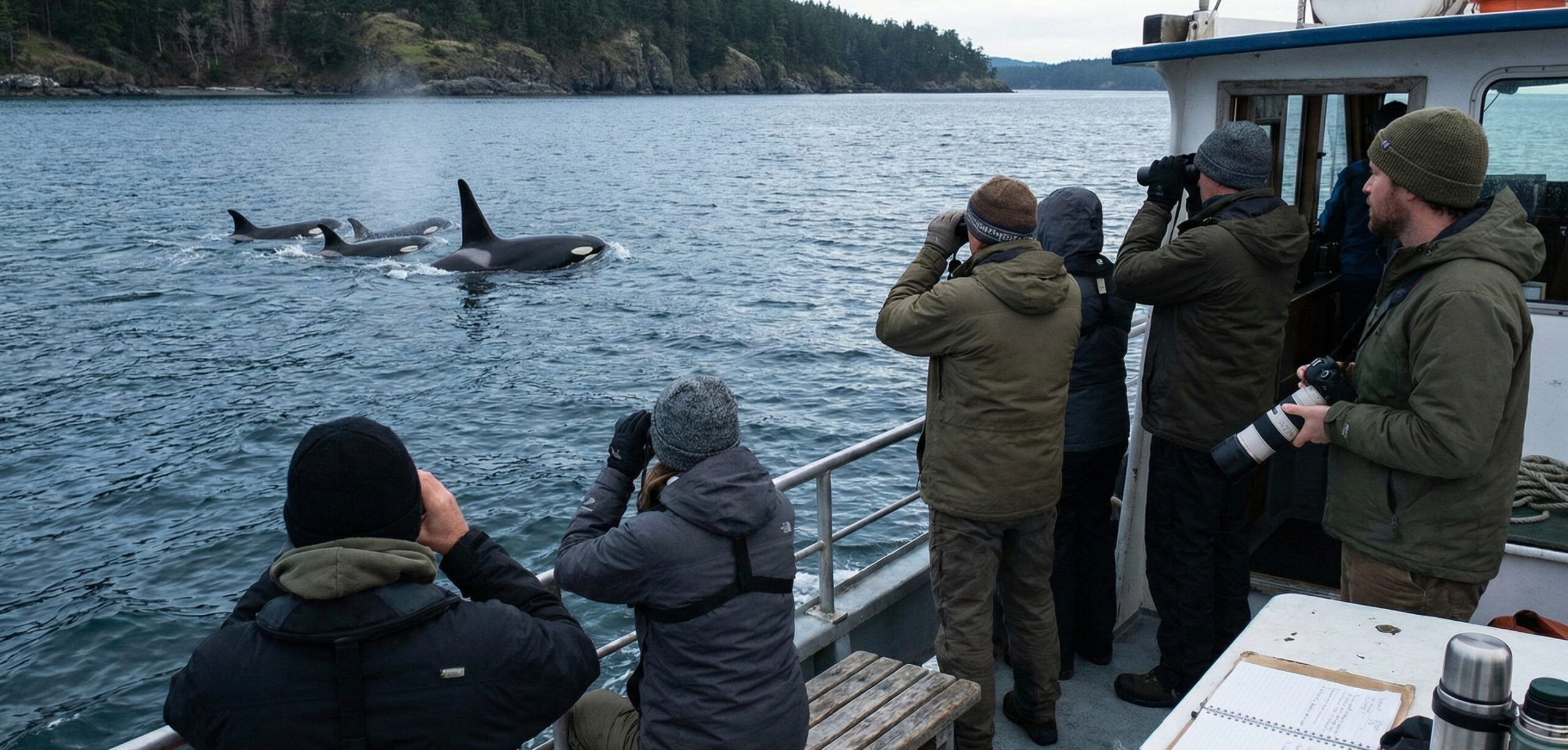
Whale watching tours San Juan Islands trips run from May through October. Three orca populations, humpbacks, minke whales, and harbor porpoises pass through these waters. The current season already has confirmed Bigg’s orca sightings off San Juan Island and humpback returns near Lopez and Orcas.
This guide compares your tour options, lays out the season month by month, and points to the launch towns most travelers pick. Use it to plan a one-day trip from Friday Harbor or a multi-day stay across the San Juan archipelago.
Table of Contents
- Tour Options at a Glance
- Whale Watching Season by Month
- Where to Launch From
- What You Will See Besides Whales
- Choosing the Right Tour for Your Group
- Frequently Asked Questions
Tour Options at a Glance
Three tour formats run in the San Juan Islands.
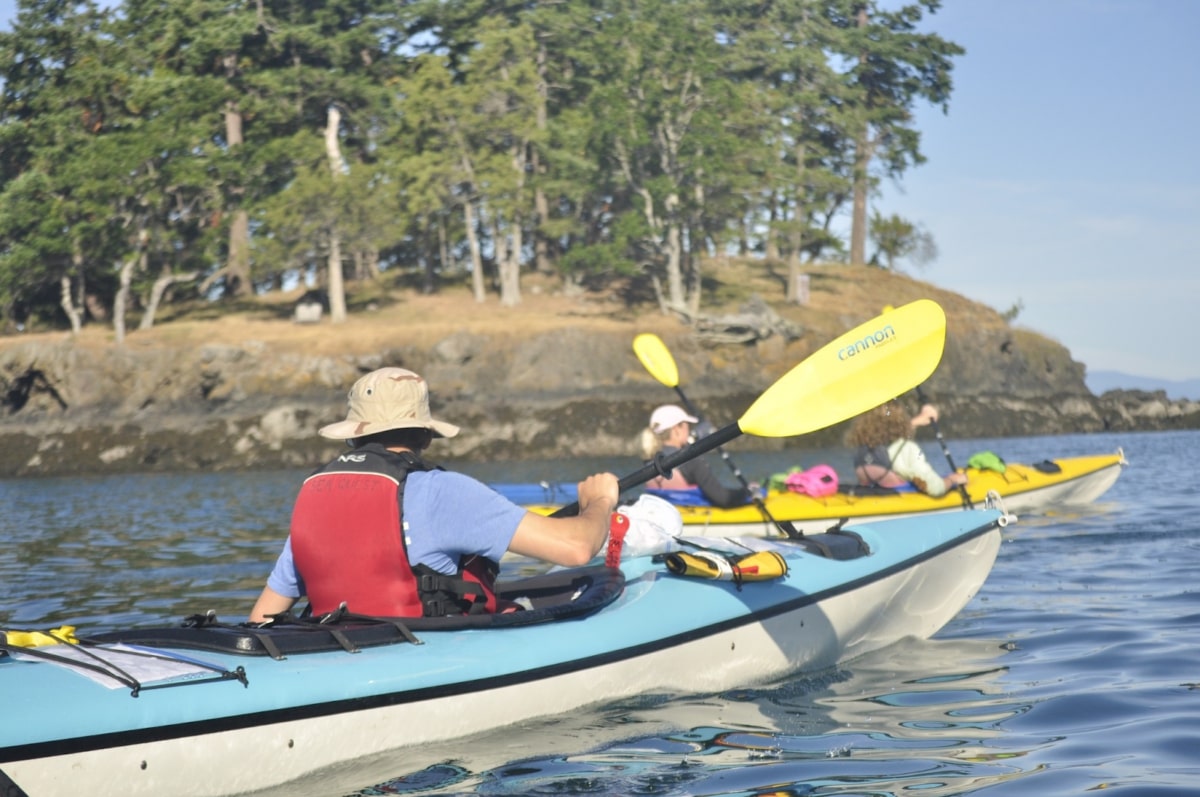
- Kayak whale watching tours. Two-person tandem kayaks paddle near orca-feeding waters. Half-day, full-day, and three-day formats. Sea level view, quiet approach.
- Boat whale watching tours. Larger vessels with covered cabins. Faster transit between sighting zones. Best for travelers with limited time or mobility.
- Hybrid trips. A kayak day plus a boat day. Useful for first-time visitors who want both perspectives.
Sea Quest runs the kayak format. Read our whale watching kayak tours overview for kayak trip routes, schedules, and pricing.
Whale Watching Season by Month
April and May
Bigg’s orcas, returning humpbacks, and minke whales arrive. Water sits in the high 40s to low 50s. Tours run on lighter schedules. Pricing is lower. Expect cool mornings.
June
Bigg’s orca activity climbs. Humpback numbers grow. Tour boats and kayaks add daily departures. Long daylight (16+ hours) supports sunset trips.
July and August
Peak season. Southern Resident orcas may return when Chinook salmon runs are strong. Bigg’s orca sightings continue. Humpbacks are reliable. Book lodging and tours two to three months ahead.
September and October
Crowds drop. Bigg’s orca and humpback activity stays steady through early October. Some operators close for the season after mid-October.
Where to Launch From
Most whale watching tours launch from one of three towns.
- Friday Harbor (San Juan Island). Largest harbor town. Daily ferry from Anacortes. Closest to Haro Strait, where orcas hunt salmon. See our Friday Harbor kayaking guide.
- Snug Harbor and Smallpox Bay (San Juan Island west side). Sea Quest’s main launch zone. Quick access to the orca migration corridor.
- Deer Harbor (Orcas Island). Smaller marina. Quieter water. Good base if you booked Orcas Island vacation rentals.
Anacortes is the mainland gateway. The Washington State Ferry connects all three islands. Reserve your vehicle slot early in summer.
What You Will See Besides Whales
The Salish Sea is one of the richest cold-water ecosystems in North America. A whale watching tour rarely passes a quiet day. Expect:
- Bald eagles and osprey along forested shorelines.
- Harbor seals on rocky haul-outs.
- Steller and California sea lions on summer haul-outs.
- Dall’s porpoises that often bow-ride or pass kayaks.
- Common murres, rhinoceros auklets, and pigeon guillemots near nesting cliffs.
Bird-focused travelers should also read our birding in the San Juan Islands guide. The Washington Department of Fish and Wildlife manages many of these reserves.
Choosing the Right Tour for Your Group
Match the tour to the people in it.
- First-time visitors with one day: half-day kayak tour or 3-hour boat tour from Friday Harbor.
- Families with kids 6 to 10: half-day kayak in protected waters or a covered boat tour.
- Photographers and naturalists: three-day Sea Quest kayak expedition. Time on the water across multiple days raises sighting odds.
- Groups and corporate: private charter via our private kayak tours page.
- Travelers with mobility limits: stable boat tours from Friday Harbor or Roche Harbor.
Short on time? Combine a half-day paddle with a stay at one of the inns covered in our San Juan Islands lodging guide.
Frequently Asked Questions
What is the best month for whale watching tours in the San Juan Islands?
July and August give the highest sighting odds across all species, with peak Bigg’s orca activity and reliable humpback returns. June and September are close behind with smaller crowds.
How long is a typical whale watching tour?
Half-day kayak tours run 3 to 4 hours. Full-day kayak tours run 6 to 7 hours. Boat tours run 3 to 4 hours. Multi-day kayak expeditions run 2 to 5 nights.
Are whale watching tours in the San Juan Islands safe for beginners?
Yes. Boat tours need no experience. Kayak tours include a beach lesson and use stable tandem kayaks. Tours run only when the marine forecast and tides allow safe travel.
Do whale watching tours run in the rain?
Yes. Light rain alone does not cancel tours. High wind, fog that limits visibility, or lightning will. Pack a waterproof jacket and pants.
What is the difference between Southern Resident orcas and Bigg’s orcas?
Southern Resident orcas eat Chinook salmon, travel in large family pods, and are listed as endangered. Bigg’s orcas (also called transients) eat marine mammals, travel in small groups, and have grown more common in San Juan waters. Both are killer whales, but they do not interact.