Join a Kayak Quest for Whales Today!
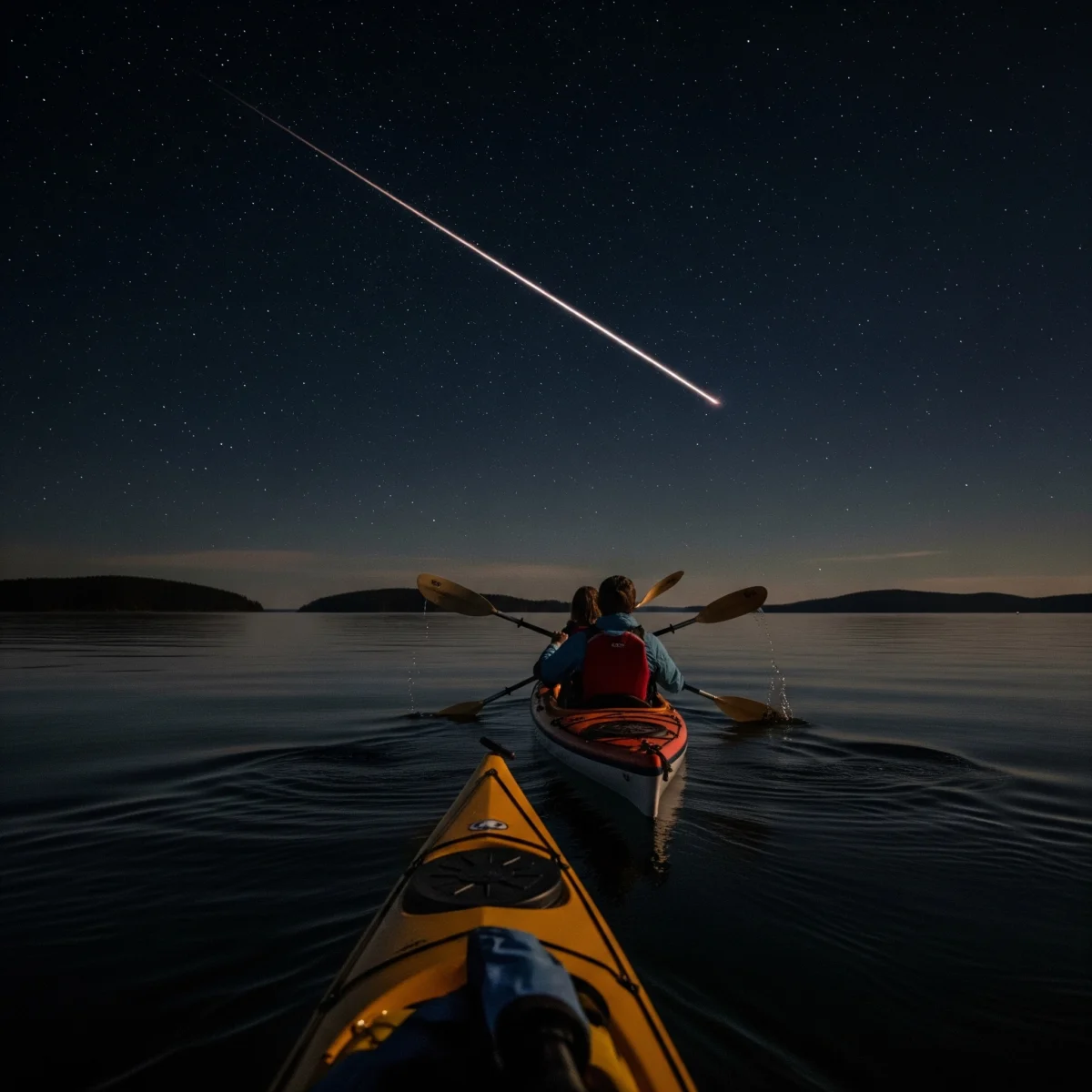
Experience a Kayak Tour from Seattle during the Meteor Shower! Join Sea Quest for unforgettable meteor shower kayak tours in the San Juan Islands—just a short trip from Seattle! No prior paddling experience is needed to witness one of nature’s most awe-inspiring light shows from the water. Paddle beneath star-filled skies as meteors streak overhead, and watch bioluminescence shimmer beneath your kayak in the plankton-rich waters of the islands. Thanks to our unique rain-shadow location, we enjoy some of the clearest night skies in western Washington—perfect for stargazing and meteor viewing. Don’t miss your chance to experience this magical celestial event by kayak. Book your Seattle meteor shower kayak tour now—it’s a once-in-a-lifetime adventure!
Sea Quest’s meteor shower kayak tours near Seattle in the San Juan Islands are offered on nights when the skies come alive with shooting stars. Our experienced kayak guides will lead you out onto the peaceful coastal waters to witness this breathtaking celestial event. As darkness falls, the sky becomes a dazzling display of meteors streaking across the heavens, creating an unforgettable night under the stars. Sea Quest’s kayak tours in the San Juan Islands provide a front-row seat to nature’s spectacular meteor showers. Paddle beneath the sparkling sky as our skilled guides navigate you through the serene waters, making this a truly magical experience you won’t want to miss.
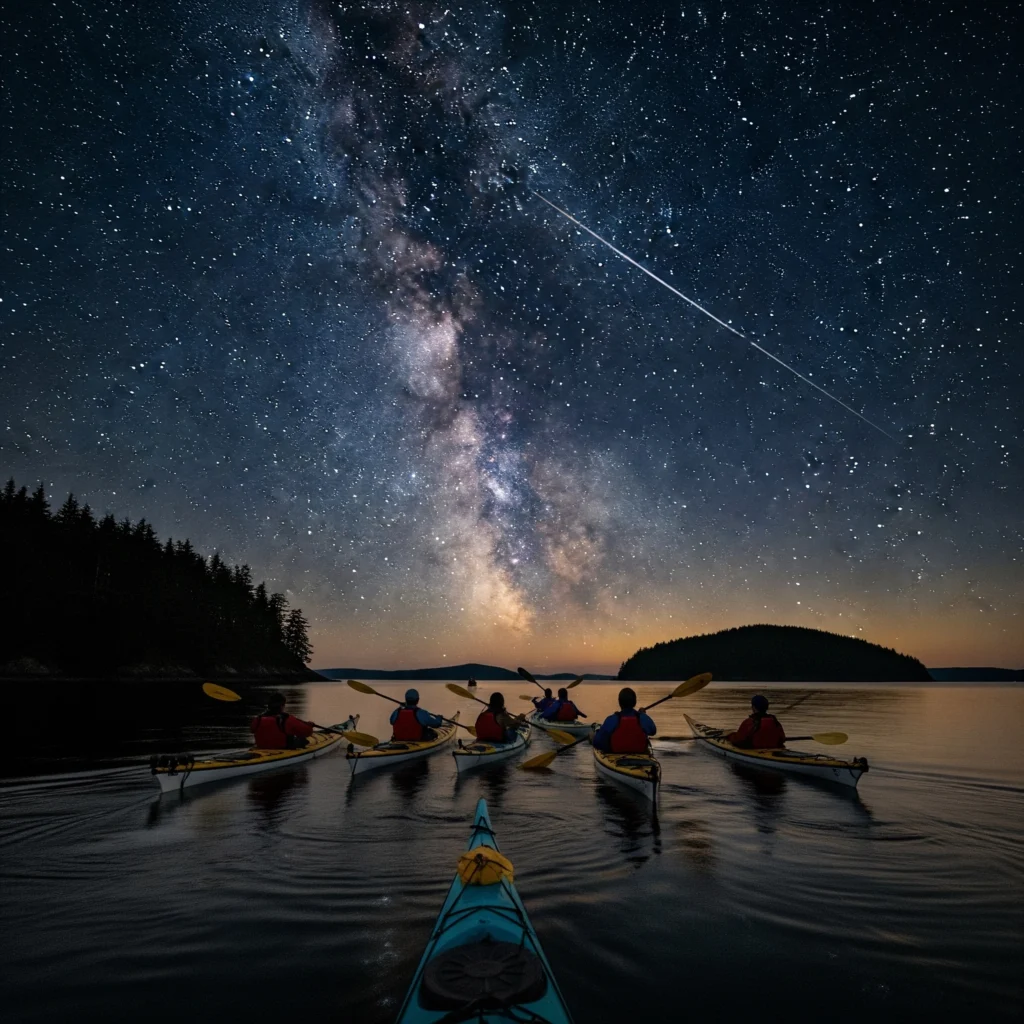
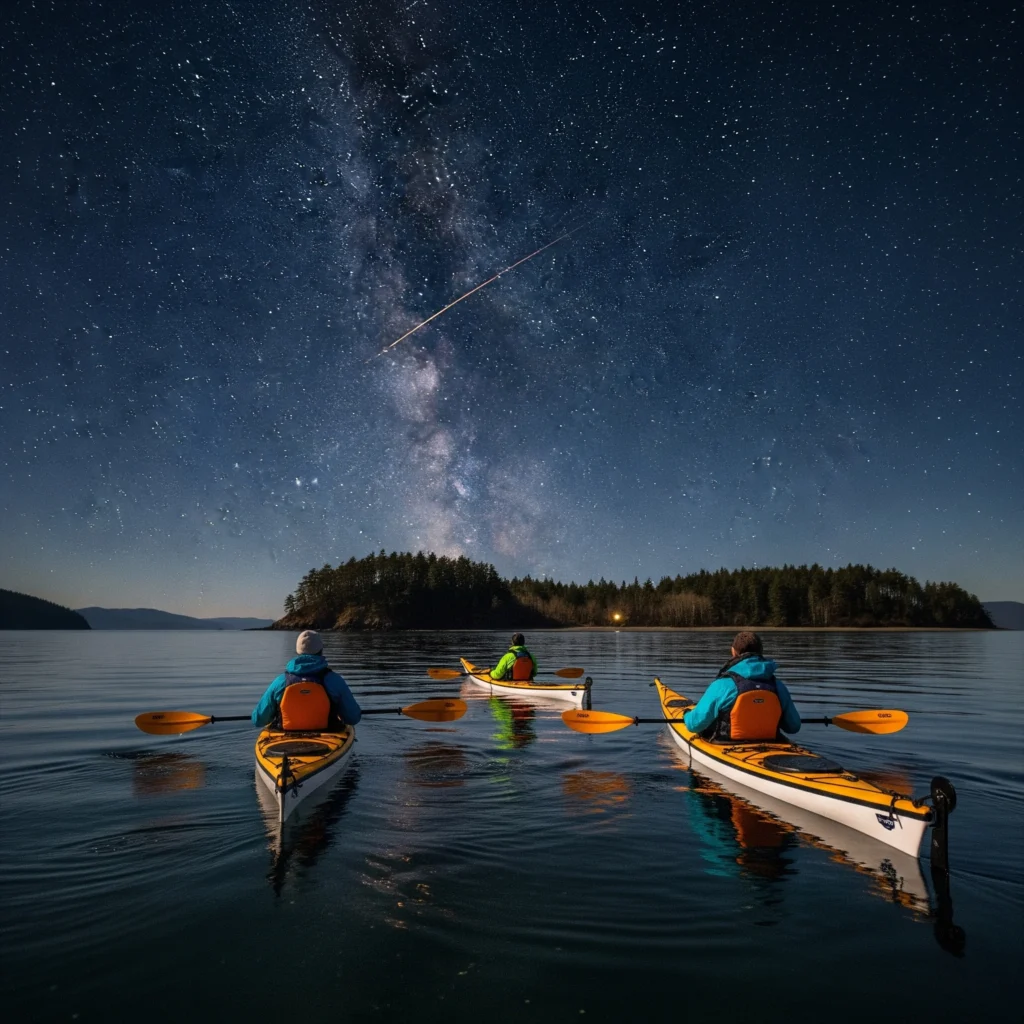
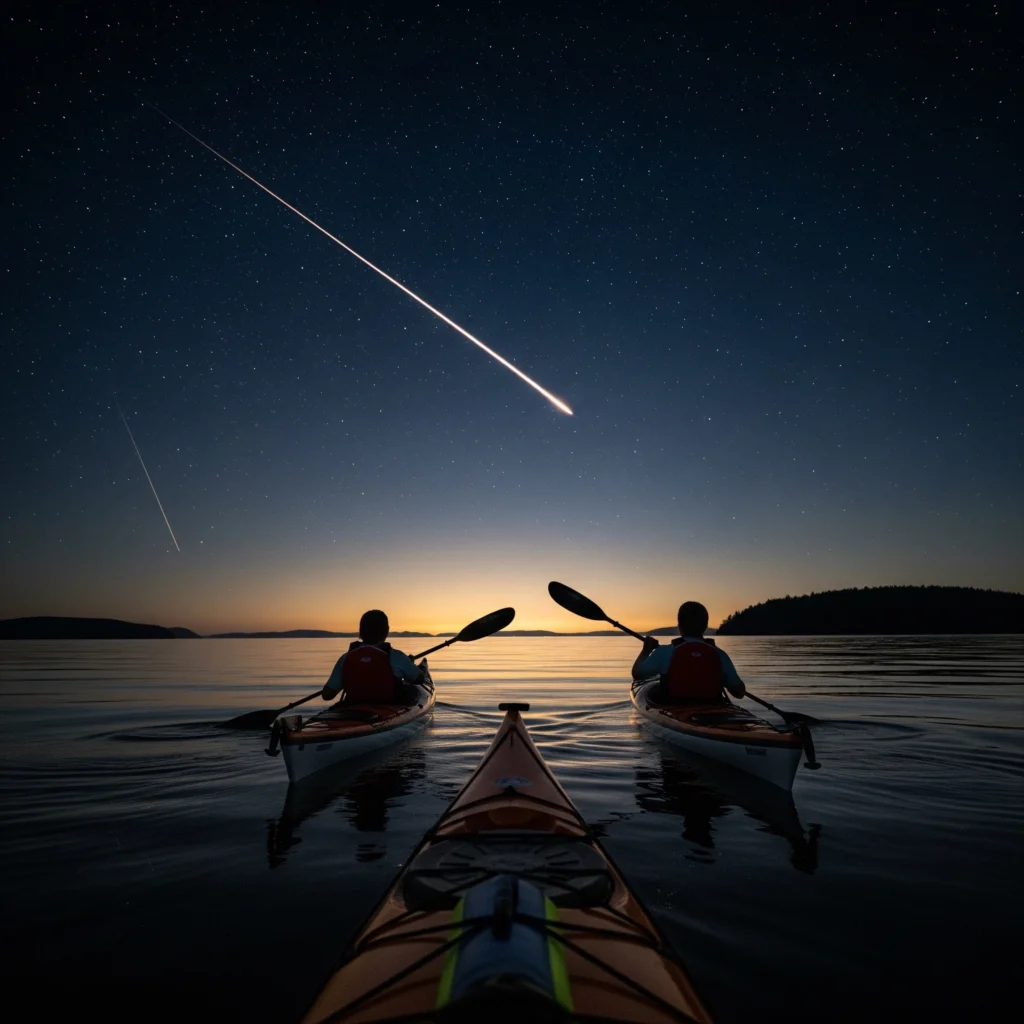
Sea Quest’s meteor shower kayaking tours in the San Juan Islands near Seattle offer not only a breathtaking adventure but also a safe and well-guided experience. Our knowledgeable guides are expertly trained to prioritize your safety throughout the entire tour. They provide clear instructions, help you with all necessary gear, and skillfully navigate the calm coastal waters. This allows you to relax and fully immerse yourself in the wonder of watching meteors streak across the night sky. With Sea Quest, your meteor shower kayak tour will be both unforgettable and secure.
Many meteor showers occur throughout the year, but choosing the right date is crucial for the best viewing on a Sea Quest kayak tour. While moonlight can dim meteors, weather—especially clear skies—and visibility are even more important. Summers typically offer the best conditions with clearer skies and calmer waters. The San Juan Islands provide a perfect escape from Seattle’s light pollution, delivering some of the clearest skies in the region.
Besides moon phase and weather, factors like peak meteor activity, tides, and wind also affect the best tour dates. Our expert guides carefully monitor all these to recommend ideal nights. Below, you’ll find specific dates tailored by our guides to help you plan your meteor shower kayak tour near Seattle.
Please note meteor shower sightings cannot be guaranteed, but we aim to provide a magical and memorable experience.

Peak: January 3-4 | Best Viewing: Dec 28 – Jan 12
This shower is active for over two weeks, giving you excellent flexibility for viewing. The peak produces up to 120 meteors per hour, but you can see good activity throughout the entire period. The waning crescent moon (15% illuminated) provides excellent dark sky conditions.
Peak: April 22 | Best Viewing: Apr 16 – 25
The Lyrids remain active for about 10 days, producing around 18 meteors per hour at peak. You’ll have a week-long window on either side of the peak date to catch these bright, long-lasting meteors from Comet Thatcher.
Peak: May 5-6 | Best Viewing: Apr 21 – May 12
This shower has an exceptionally long active period of over 6 weeks, though the most productive viewing occurs from about a week before to a week after the peak. The shower produces up to 60 meteors per hour, with the best viewing window being April 21 to May 12.
Peak: July 30 | Best Viewing: Jul 18 – Aug 12
This shower offers nearly a month of viewing opportunities, with steady rates throughout. The 27% waxing crescent moon provides excellent conditions, and you can expect 15-20 meteors per hour during the peak period.
Peak: August 12-13 | Best Viewing: Jul 25-27 & Aug 22-24
While the Perseids are active for over a month, the 84% full moon during peak severely limits viewing. The best viewing windows are July 25-27 and August 22-24 when moon interference is minimal. These periods offer good meteor rates without the bright moonlight.
Peak: October 21-22 | Best Viewing: Oct 2 – Nov 7
The Orionids provide over a month of viewing opportunities, with the new moon making October 21-22 ideal for viewing. This shower produces about 20 meteors per hour and is known for bright, fast meteors with multiple lesser peaks possible.
Peak: November 17-18 | Best Viewing: Nov 6 – Nov 30
The Leonids have a long active period but the best viewing is typically from early November through the end of November. The waning crescent moon provides excellent conditions, with 10-15 meteors per hour expected.
Peak: December 13-14 | Best Viewing: Dec 7 – 17
The best meteor shower of 2025, the Geminids offer about 3 weeks of activity with the most productive viewing from December 7-17. The 24% waxing crescent moon provides excellent dark sky conditions for viewing up to 150 meteors per hour.
Peak: December 21-22 | Best Viewing: Dec 15 – 24
The final shower of 2025 provides about 10 days of viewing opportunities, with the new moon on December 20 creating perfect conditions. Expect 5-10 meteors per hour during this winter solstice shower
Meteor showers are natural celestial events where dozens—or even hundreds—of meteors streak across the night sky, often appearing to “rain” from a single point. These meteors are tiny pieces of space debris, usually no larger than a grain of sand, that burn up as they enter Earth’s atmosphere at high speed. The result is a brilliant flash of light, often called a “shooting star.”
Meteor showers happen when Earth passes through the trail of dust and debris left behind by a comet or asteroid. As we move through this cosmic debris field, the particles collide with our atmosphere and create these glowing streaks of light.
Several major meteor showers happen each year—like the Perseids in August and Geminids in December—with some offering peak rates of over 100 meteors per hour under ideal conditions. For the best viewing, dark skies and minimal moonlight are ideal—making our kayak tours in the San Juan Islands near Seattle a perfect way to experience these magical events far from city lights.
“Meteors are stars falling from the sky.”
✘ False. Meteors are not stars—they’re tiny bits of rock or dust (usually from comets or asteroids) burning up in Earth’s atmosphere. The “shooting star” is just the glowing trail they leave behind.
“Meteor showers happen all night long.”
✘ Not quite. Most meteor showers have peak hours, often between midnight and dawn, when Earth is turned into the path of the debris field. While some meteors may appear earlier in the evening, the best activity is usually later at night.
“You can see the same number of meteors no matter where you are.”
✘ Wrong. Location matters a lot! Light pollution from cities like Seattle can wash out fainter meteors. That’s why remote places like the San Juan Islands are ideal—they offer darker skies and far better visibility.
“Meteor showers happen randomly.”
✘ Nope. Meteor showers occur at predictable times each year as Earth passes through debris trails left by specific comets. Major showers like the Perseids and Geminids are annual events.
“You need a telescope or special gear to see them.”
✘ Definitely not! Meteor showers are best enjoyed with the naked eye. In fact, telescopes limit your field of view. All you need is a dark sky, some patience, and ideally—like on our tours—a relaxing kayak to float on.
Meteor showers are caused by streams of cosmic debris—tiny bits of rock, dust, and ice—left behind by comets (and occasionally asteroids) as they travel through the solar system. When a comet gets close to the Sun, it heats up and begins to shed material. Over time, this creates a trail of debris along its orbital path.
As Earth makes its yearly orbit around the Sun, it regularly passes through these ancient debris fields. When that happens, those leftover particles—most no larger than grains of sand—enter Earth’s atmosphere at very high speeds, often between 25,000 and 160,000 miles per hour.
When these particles collide with the atmosphere, they compress the air in front of them, generating enough heat to cause the debris to burn up in a flash of light. That brilliant streak across the sky is what we call a meteor.
Each meteor shower is associated with a specific parent body, usually a comet. For example:
Meteor showers appear to come from a single point in the sky, called the radiant, which is usually named after a nearby constellation. For example, the Perseids appear to radiate from the constellation Perseus.
The number of meteors you can see depends on several factors:
That’s why Sea Quest’s meteor shower kayak tours near Seattle are so special – our location in the San Juan Islands offers dark skies, minimal light pollution, and expert guides who time tours around peak activity for the best possible viewing.
3 hours
All Group Sizes
All Ages
Beginner Friendly
$139
Every Evening Every Day
San Juan Islands, WA
(437 Reviews)
Schedule: Meteor Shower and Stargazing Kayak Tours offered daily.
Trip Fee: $139 per person plus 8.3% state tax & $10 government launch fee. On rare dates, the fee is $159+ due to limited resources, and this will be noted in the online reservation system.
Meeting Place: Friday Harbor, San Juan Island. Look for our van and kayak trailer in the traffic circle adjacent to the Friday Harbor Ferry Terminal.
Meeting Time: Stargazing kayak trips usually begin at sunset. Note that the trip start times in our reservation system vary with seasonal daylight hours. Our online reservation system will indicate the exact meeting time if you enter a specific date. If the times don’t work for you, we may be able to change them to meet your needs so feel free to ask!
Itinerary: Our shuttle van takes you to the launch beach. The drive takes between 5 to 25 minutes. We provide a one hour kayak lesson on the beach. This lesson familiarizes everyone with the basic skills before we launch the sea kayaks in the dark. We then explore for about 1½ hours, covering 1 to 2 miles during the kayak adventure. We will paddle at a leisurely pace in search of good viewing areas. If we find a dark spot we will float there to soak in the experience of the stargazing. Remember to bring a headlamp or flashlight but turn it off to enjoy the meteor shower!
Finish Time & Place: Friday Harbor Ferry Terminal; 3 hours after we pick you up.
Total Time: Approximately 3 hours from meeting your guides to finish. Be aware that our weather, winds or currents can occasionally delay us!
WE PROVIDE THE FOLLOWING:
Sea kayaks, all related sea kayaking trip gear, safety equipment, transportation to and from Friday Harbor and the launch beach, instruction and expert guides.
WHAT YOU NEED TO BRING:
Suitable clothing and footwear for the beach, water bottle, HEADLAMP. Bring a warm sweater and rain jacket if windy or rainy. Click prepare for a San Juan Islands kayak tour for some tips.
Meteor shower viewing cannot be guaranteed, as meteor activity can vary and skies may occasionally be obscured by clouds. That said, clear nights are common in the San Juan Islands from May through September, making this one of the best regions near Seattle for stargazing.
Our meteor shower kayak tours end well after dark, so please be sure to book your accommodations in advance. The Washington State Ferry system typically does not operate late enough for guests to leave the island after the tour. Staying overnight ensures you can relax and fully enjoy this magical night-time adventure without worrying about your return travel.

National Geographic chooses our San Juan Islands Kayaking tours in “10 Best Trips in the World for 2011.”

Sea Quest Kayak Tours is on ABC News! See us Kayaking with Orca Whales in the San Juan Islands.

San Juan Islands Kayaking Trips in Killer Whale Waters of Washington – a World’s Top 10 Adventure Bargain!

National Geographic chooses our San Juan Islands Kayaking tours in “10 Best Trips in the World for 2011.”