

Whale’s Gift Restores Kayakers’ Spirits Christmas Day in the San Juan Islands
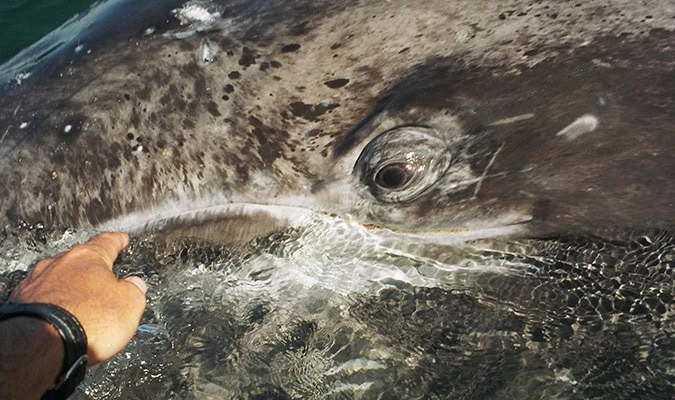
The current was weakening towards slack – the moment between tides when the sea becomes motionless and kelp bulbs expose themselves to the calm pewter surface of Puget Sound. As I contemplated the stillness from the cockpit of my kayak, I re-considered my choice of not notifying anyone of my plan for kayaking in the San Juan Islands this morning. It happened to be Christmas Day, my first since getting divorced, and I just couldn’t muster any Christmas spirit. So why bother anyone with my mopey demeanor, even if my goal was to paddle through the dangerous narrows of Deception Pass? As an experienced solo kayaker and guide for Sea Quest Kayak Tours based in Friday Harbor, I know that failing to file a float plan with a friend should immediately qualify me for a Darwin Award. Deception Pass has swallowed entire ships full of men! Currents can exceed 8 knots and generate standing waves, rips and whirlpools. The frigid waters and sheer rock walls offer no escape if things go wrong. And kayaking alone amplifies these dangers. So why had I chosen this course today? Was it a bit of the depression that so many people experience around the holidays? I certainly didn’t feel like having an extreme kayak adventure in the San Juan Islands this day, especially when the reality of my failed marriage weighed so heavily upon me. But I have learned that when my soul is adrift or feeling bruised, the solitude and steady rhythms of sea kayaking serve to sooth and heal. The aggravations within my mind simply needed to surrender to the total mindfulness required for safely navigating Washington’s Deception Pass. Slipping into the cockpit of a kayak is a signal to my mind to allow all my worries to be left behind in my gentle wake. But today I was having a particularly hard time drowning the thoughts of my recent divorce. I wasn’t sure I had the energy to make the charge through Deception Pass and for a while I just sat with my eyes closed and focused on my breathing. The sensation of floating alone in the Salish Sea began to work on me like a healing balm. The cries of gulls and eagles, the iodine smell of kelp forests, conspired to push away my thoughts and allowed me to observe my emotions without having them control me. With the water being so calm, I was able to keep my eyes closed without risk of losing my balance in the icy waters. I began to stretch the muscles of my upper body to shake away any vestiges of tension and prepare for some hard paddling. While bending forward with arms outstretched for my kayak’s bow, I felt a sudden and sharp wave strike my kayak that snapped my eyes open. It was at that instant I found myself gazing directly into the gigantic eye of a gray whale! How could something so massive be so stealthy? As the gray behemoth slowly glided past, our eyes locks and I felt it acknowledge my presence. Eternity passed in those few moments, along with a thousand shades of mottled gray and aquatic blue. To me, it seemed as if the whale’s eye filled with solemn regret for my sadness. Like alchemy, I felt as if my soul was transformed from lead into gold. Then my own eyes began to fill with tears as unexpected laughter sprang from deep within my belly! The whale’s Christmas gift to me is something that I will forever hold. I came to the San Juan Islands to seek refuge from my own negative thoughts and was provided solace of the mind and freedom of the soul. Although eternal in impact, my connection with this gray whale lasted less than two minutes. It helped to forge the connection we all share with the Universal Truth of Oneness. To this day, whenever I feel lonely and adrift, the memory of this whale’s regard reminds me that I’m never alone. The end of my story is much more prosaic in comparison. The remainder of the day was marked by many more encounters with beautiful wildlife, although none so dramatic or impactful. But one does bear mentioning, as it serves the perfect counterpoint to my encounter with the benevolent whale. After finishing my kayak trip, I picked up my kayak and began to hike up the trail towards the road. A bald eagle sat upon a branch overhead and as I passed beneath it I heard a splat on my kayak and felt something warmly wet strike my brow. Not all of the gifts of nature as so up-lifting! So I ended my Christmas kayak journey christened by an eagle, blessed by a whale, and feeling content with my place in the universe. Story contributed by former Sea Quest guide Georg Schluender. Click here to learn more about kayak guide jobs in the San Juan Islands. Join a Kayak Quest for Whales in the San Juan Islands of Washington Ready to experience it yourself? Explore our Women’s Kayak Tour.
The History of Sea Kayaking – Sea Quest Kayak Tours/San Juan Islands
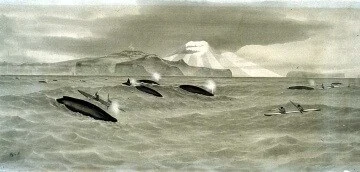
Sea kayaking is a technology that is at least 4,000 years old. Peoples of the high northern latitudes (Greenland, Alaska, Russia, and Canada) were the first to invent wood- or whale bone-framed boats covered with a watertight skin. Some experts claim the Inuit were the first to invent these ingenious boats while others suggest it was the Ainu or Aleut. The modern name “kayak” is derived from the ancient Aleutian “iqyak“, meaning “man-boat” or “hunters-boat.” The hunter’s family would carry camp and supplies in a larger type of kayak called an “umiak”. The earliest and most primitive kayaks were built for calm waters such as rivers, estuaries and bays. The first true sea kayaks did not develop until both paddling skills and kayak design theory matured. Sea kayaks evolved into the ideal vessel for aboriginal hunting and fishing cultures due to their inherent stealth. There seems to be no limit as to the size of prey that could be taken from a sea kayak. Targets hunted from kayaks include seals, walruses, whales and caribou. In the late 1700s, Russian fur traders enslaved native hunters from Alaska and organized vast fleets of kayaks that swept south all the way to San Francisco Bay in pursuit of sea otter pelts. No one is sure exactly when the first kayak made its way to Europe. However, several trans-Atlantic kayak journeys from Labrador or Greenland to Scotland were endured by adventurous Inuit paddlers in the 1800s. Kayaks soon caught on in Europe, with canvas substituting for traditional skin covers. European craftsmen and naval architects took their turns at attempting to improve the kayak, but the aboriginal designs proved to be quite mature and highly-evolved. In fact, at the hands of Europeans, both kayak designs and paddling skills deteriorated drastically from the highly refined principles of the native kayakers. The sport of kayaking and long-distance kayak touring was popularized in 1845 when a Scotsman named John MacGregor introduced his “Rob Roy”, a semi-decked canoe loosely based on a native kayak. Kayaking became an official Olympic sport in 1936 with events that included the solo and tandem 1,000m and 10,000m flat-water races, and white-water and slalom courses. Kayaks were adopted by military forces and used during World War II by the British to place limpet mines on German vessels. They used them again during the Falkland Islands War by sneaking into Port Stanley to create diversionary explosions as the main force struck from inland. Military kayaks are ideal for special operations as they can be launched from submarines, deployed from aircraft, and cruise silently below the radar. Kayak designs began to advance in the 1950s with the advent of modern materials such as fiberglass and rubberized fabric. Ironically, the thrust of these “modern advancements” led to a revival of traditional Inuit kayak designs. Today, the very best modern kayaks still look, feel, and perform very much like kayaks made centuries ago. Whereas the hulls are very traditional in shape, significant to improvements can be seen in hatches, bulkheads, seats, and other features. It turns out that even our best computer software for naval engineering cannot improve on the intuitive genius of the kayak’s original innovators. By joining a Sea Quest kayak tour, you can experience paddling the very best modern-day sea kayaks. All of the kayaks we use at Sea Quest display the original design concepts of native Greenlanders as translated into modern materials. They are fast and highly maneuverable but can handle extremely rough conditions while remaining very stable and comfortable. The sport of “kayak touring” originated in the protected marine waters of the Pacific Northwest and the sheltered San Juan Islands of Washington state are still the best location for beginning kayakers to get in their very first strokes. Join a Kayak Quest for Whales in the San Juan Islands of Washington Plan your own adventure with a Private Kayak Tour from Sea Quest.
San Juan Kayak Guides’ Vacation to Washington’s Remotest Island
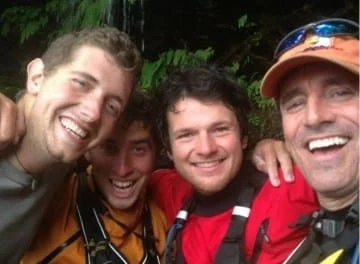
What do kayak guides in the San Juan Islands do on their day off? Go kayaking, of course! At the end of June, my fellow sea kayak guides and myself had a couple of days off from our busy guiding schedule in the beautiful Pacific Northwest of Washington. We wanted to make the most of it, so we organized an ambitious kayak trip from our base in Friday Harbor. Our group consisted of my knowledgeable and handsome fellow sea kayak guides – Peter, Abbot, Alex, Greg, in addition to myself, the lone female. We are a mix of whitewater rafters, biology majors, and ski instructors from all over the country that came together in the San Juan Islands for the summer sea kayaking season. The day of our launch, we threw dry suits, sleeping bags, safety gear, and radios in our guide bags and loaded Tempest and Discovery kayaks on our roof racks. The weather forecast, tides, and current tables were carefully studied, our mileage calculated, and our trip plan was filed with our instructors. On most days we lead tours for Sea Quest Kayak Tours along the west side of San Juan Island. Our typical day trip route explores scenic Haro Strait and features views of Canadian islands to our west and the snow-capped Olympic Mountains to our south. But the outstanding natural and human history found along San Juan Island’s shore is the real highlight of this route. Kayaking in Haro Strait puts our guests in the heart of orca whale territory. Haro Strait is where the orca whales most frequently hunt and travel in the San Juan Island as they spend the summer months foraging for salmon in Washington. In addition to the orca whales, the west side offers habitat to a variety of other wildlife. Harbor seals, harbor porpoises, and bald eagles are frequently spotted on our trips. During a low tide, we see barnacles, chitons, purple sea stars, and much more clinging to the dark basalt rock of this cliff-like shore. Our guided San Juan kayak tours paddle right past Lime Kiln State Park, the first park in the world created for whale watching. The park has preserved historic lime kilns that were a key part of the San Juan Island economy in the late 1800’s and features a functioning lighthouse and whale research station. Most guests enjoy posing here for a picture with Lime Kiln Lighthouse in the background. Past the lighthouse is Deadman Bay, a popular beach and former haunt of smugglers. As professional guides who frequently paddle this popular west side route, we desired to visit the most remote destination possible for our personal expedition. Our goal became Patos Island, the most isolated jewel in the archipelago, located in the extreme northwest corner of Washington state. So we launched our kayaks from the north end San Juan Island and headed for the watery border that separates the US from Canada. Our first stop was Sandy Point on Waldron Island, home to a community of independent people pursuing an alternative lifestyle. After a quick stretch of the legs, we hopped back into our kayaks and crossed to Skipjack Island. This uninhabited wildlife refuge obstructed the tidal current and created a small rip current to cross for a quick thrill. Next up was a long open water crossing to Patos Island. In the distance beyond, we could see the skyline of Vancouver, Canada and the snow-capped peaks of both Canadian Coastal Range and North Cascades of Washington. We selected some landmarks to use as in a navigation technique called “site and range” that enabled us to stay on course as we compensated for the strong currents sweeping through the archipelago. In the middle of this long and silent stretch of the inland sea, where the only sounds were the drips of our paddles, we heard the explosive breath of a whale. Right behind us, a minke whale surfaced twice, spouting mist from its twin blow-holes. After it passed, the five of us turned to each other to talk about this wonderful encounter. Oddly, in the middle of this still blue void, we heard our own voices echoing back to us. Our shouts seemed to bounce off the distant mountains, but in reality they were reflecting off a temperature inversion layer that had formed over the cold water in the still air. This same phenomenon is responsible for bending light into mirages that frequently grace our summer horizons. We continued paddling and landed in the early evening light on Patos Island. Patos is arguably the most enchanting island in the San Juans. It is remote, uninhabited, and only reached by those with enough curiosity and determination to make the journey. The picturesque lighthouse still works to keep freighters bound for Alaska in their proper lanes. The shoreline of Patos is a tan and orange sandstone, accented by the rich greenery of Douglas-firs and Pacific madrona trees. We choose a campsite with a perfect western view from our cove towards the brilliant summer sunset. After a long day of paddling 15 miles, dinner was the next priority. We combined green peppers, yams, cheese, and black beans into a dish of enchiladas and ate them around a glowing camp fire. The sun sank beneath the horizon and we set our sleeping bags under a tarp to escape the heavy dew. The embers of the fire winked off and soft breezes wafted across our idyllic island, lulling us to sleep after a very satisfying day of sea kayaking. Sea kayaking is often thought of as a sport, but it is arguably both an art and science. The art can be found in the perfection of a paddle stroke, the finesse of a roll, and a smoothly carved turn. But science is absolutely essential for calculating the tides and currents, predicting the winds and weather, and putting it all together to determine the safest and most efficient times to cross between the islands. More science comes into play
Orca Whales Return to San Juan Islands Kayaking Routes
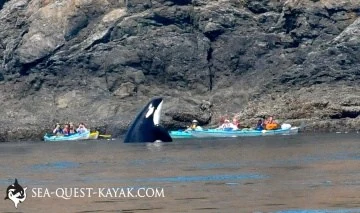
We’ve been enjoying numerous whale watching encounters on our kayak tours in the San Juan Islands since the orca whales of L-pod returned this month. Local whale biologists have gotten a full set of identification photographs for the entire clan and have determined that two orcas did not survive the winter after they left the Salish Sea of Washington state to hunt in the open waters of the Pacific Ocean. The Center for Whale Research reports that two adult female orcas from L-pod are now dead. The cause of death is unknown, but age and scarcity of their most important prey, Chinook salmon, likely had a role. Both whales were senior members of the community and too old to bear calves. However, their roles in the orca culture were nonetheless very important as matriarchs serve as pod leaders and have an integral role in raising calves. Most disturbing is that one of the deceased female orcas leaves behind just one son with no other offspring to continue the family line. Long term research by the Center for Whale research has shown both that post-reproductive females have a significant role in the care of calves – just as human grandparents do – and that the sons often die once their mothers are gone. One of the deceased killer whales, L2, lost three of her offspring through the years, and only her youngest son, L88 is still alive. In the “Southern Resident” orca culture, the iconic whales of the San Juan Islands that we see most often on our kayak tours, a male orca without a mother behaves much like an orphan. Despite being over 20 years old, L88 is unlikely to survive unless adopted by another matriarchal female. And if he is unable to reproduce, the family’s genetic lineage will end. There are now 37 members in L pod, the largest of the three salmon-eating “resident” pods that we see on our San Juan Islands kayak tours. The Southern Resident Community of orca whales now totals 82, the lowest number since 2001. This is a reflection on our society’s poor management of the salmon population and our inability to control our toxic wastes. Most residents of the San Juan Islands and Washington state still don’t realize that our local killer whales are listed as endangered along with all five species of salmon. Too little has been done to foster a recovery of either whales or salmon. Although spawning streams are receiving new protections, they are still horribly tainted by pollutants that run off of our roads, lawns, and farms. Our San Juan Island orcas are known to carry a higher load of deadly toxins that any other whales in the entire world. Meanwhile, the government agency in charge of the recovery of both salmon and killer whales has been asleep on the job. The National Marine Fisheries Services (NMFS) watched and did nothing as these keystone species ran into serious trouble. Our federal court system had to force them into action but so far no positive results can be seen. Quite the opposite in fact, as just last year NMFS gave their approval to the US Navy to continue bombing and using skull-crushing sonar in the orca whales’ habitat, even inside the Olympic Coast National Marine Sanctuary. The grisly death of this juvenile female orca identified as L112 now looms larger as our endangered orca population needs all the young females it can produce. This young whale was killed by an explosion last year, likely a result of US Navy bombing, although no one in our government wants to admit this. Despite the evidence, NMFS still contends that dropping bombs in endangered orca whale habitat is perfectly okay. Simultaneously, this same dim-witted agency is threatening to outlaw kayaking in the killer whale habitat off San Juan Island under the false premise that silent, non-polluting kayaks pose a greater threat to the whales’ survival than bombs! Meanwhile, the bureaucrats fiddle, the bombs continue to drop, and our orca population in the San Juan Islands remains at extreme risk. Join a Kayak Quest for Orca Whales near Seattle, Washington Turn this into your own trip — book a Luxury Kayak Camping trip.
Washington’s Killer Whale Satellite Tagging Risks Endangered Species
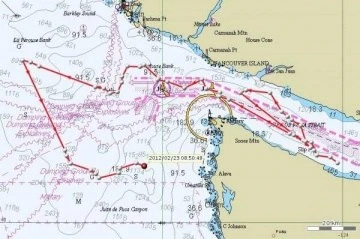
The controversial satellite tagging of killer whales in Washington has ended for 2013. We have posted twice before on this topic and the potential dangers it holds for the endangered orca whales that we enjoy on our kayak tours in the San Juan Islands. This year’s target was K-25, a young adult male born in 1991 that goes by the name of “Scoter”. The tag did not tear free of the orca whale’s dorsal fin like last year and it yielded 3 months of essentially useless data. The tagged whale and his K-pod family traveled from Puget Sound all the way down to Point Reyes, California. Most of the winter was spent near the mouth of the Columbia River and the outer coast of Washington. The idea of the project was to learn more about their winter movements, habitat use and feeding behavior. Unfortunately, nothing new was learned and the data only confirmed what we already knew about the orcas. The risk to their health is clearly unwarranted and most local biologists, conservationists, and kayakers are strongly opposed to the project. We already know why our orca whales in the San Juan Islands are endangered. Destruction of salmon spawning streams and toxic pollutants that mainly enter our marine ecosystem from winds that blow here from China are to blame. NOAA and NMFS have no plans to curtail salmon fishing and have done very little to promote improved spawning despite a long-delayed recovery plan mandated by federal courts. The satellite tagging study results will not suddenly jolt NMFS into doing a proper job of managing salmon or orca whales. Nor will it induce NMFS to halt the US Navy’s use of the orca’s winter range for testing bombs and high-energy sonar despite the fact that it is a national marine sanctuary. So what exactly is the point of putting even one individual of such a highly endangered killer whale population at risk? NMFs admits that their recovery plans are not working. But instead of taking effective actions, they continue to make noises about outlawing kayaking on the west side of San Juan Island. To NMFS the answer is clear: bombs good, kayak tours bad. And we are supposed to trust this agency that negligently allowed both salmon and whales to come to such dire straits under their watch. Perhaps it will take yet another trip to federal court to straighten NMFS out. Their track record in court is as bad as their management of our endangered marine species. Unfortunately, kayakers will likely remain their scapegoat as we don’t have the deep pockets of the special interest groups that dictate their policies. Meanwhile, both salmon and the orca whales that depend on them will continue to languish. Join a Kayak Quest for Killer Whales near Seattle, Washington Paddle these waters yourself on a Full-Day San Juan Kayak Tour.
Sea Kayaking Guide Employment & Office Jobs Available in 2021
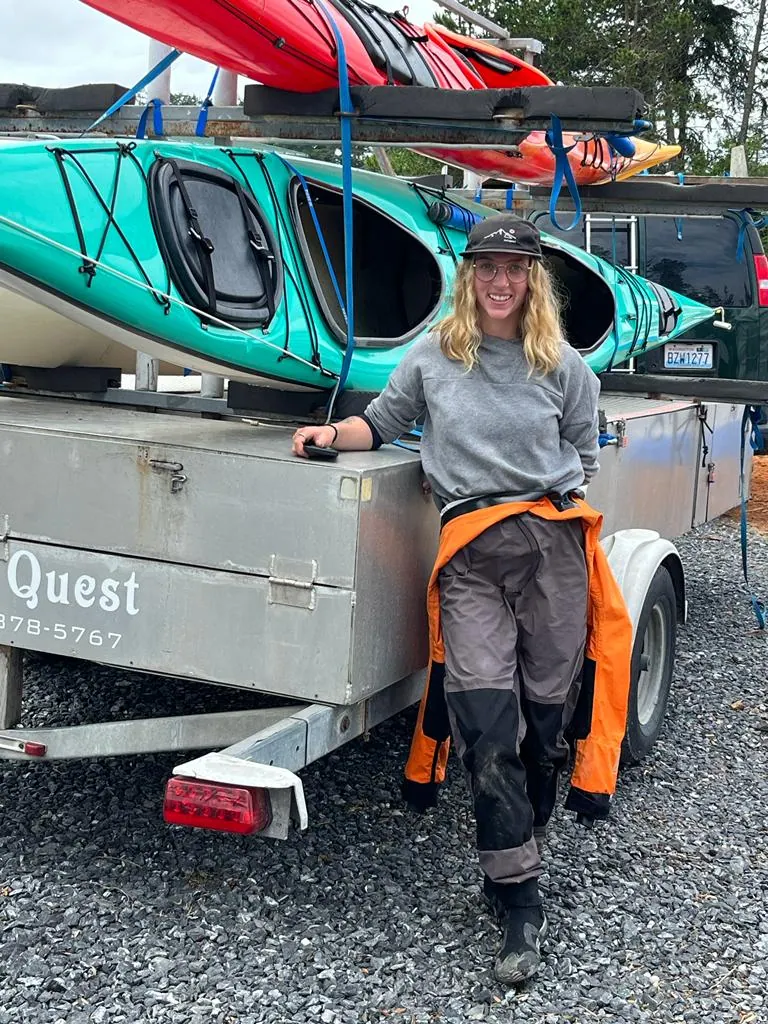
Can you think of a more rewarding summer job than guiding sea kayak tours in the San Juan Islands? Would you like to lead kayak trips in the best waters for observing orca whales in the United States? A location with over 5000 seals, eagle nests along nearly every mile of shore, and the site of the newest National Monument? Sea Quest Kayak Tours is looking for professional, mature, and fun people who desire a quality outdoor job. At Sea Quest Kayak Tours we have led the way in the modern evolution of turning kayak tours into educational experiences. We were the first company to require our sea kayaking guides to be either a biologist or have a degree in the natural sciences. We were the first kayak tour company to use tandem kayaks with four bulkheads instead of the standard two. Education and safety are the pillars of our sea kayaking trip program in Washington state. Our focus in this regard applies not just to our guests, but also to our kayak tour guides and trip leaders. As a Sea Quest guide, you will feel more at ease knowing our kayaks are the newest and safest fleet in the San Juan Islands. All of our equipment is top notch so you won’t be fiddling with repairs and maintenance on a daily basis. Depending on the trip roster, our guides paddle the highest-performance solo kayaks made: the Discover by Northwest Kayaks and the Tempest by Wilderness Systems. These kayaks foster quick learning of advanced skills, yet you will never out-grow these designs. We are seeking naturalists who have the right combination of qualifications: degree, experience on the water, first aid, superb communication skills, and engaging personalities. You don’t have to be an expert kayak for all of the positions. We provide a comprehensive training program for those who need to develop their sea kayaking skills. Less experienced folks often take a dual position in their first year with us, working both office duties and assistant guiding duties until they develop the skill set and experience to lead the longer multi-day kayak tours. Kayak guiding is not just a “summer job”, even though it is seasonal in nature. Being a kayak guide in the San Juan Islands is a professional position which requires a professional demeanor and code of ethics. We demand more from our staff than other kayaking tour companies, but we also reward you with the highest pay scale and the fullest schedule. Our lead guides don’t have to sit around waiting for tours to fill – we keep you busy making your hay while the sun is shining! We are also looking for Office/Logistics staff. If you feel that you are qualified for both types of jobs then please let us know when you apply. We are also open to hosting interns who are still working on their degrees. Applications are by resume only. Send or email us a resume with details about your education, professional experience, experiences with any type of water vessel, and employer references. A recent photo in an outdoor situation will help us put you in the right perspective. Applicants can send resumes via email to jobapplicant (at) troubleshooted.wpenginepowered.com, or snail mail to PO Box 2424, Friday Harbor WA 98250. More information on becoming a sea kayak guide in the San Juan Islands, or office positions, can be found here: job openings and employment info. Make it real: reserve a 2-Day San Juan Kayak Tour today.
August Sightings: Orca Whale Kayak Tours from Friday Harbor, WA
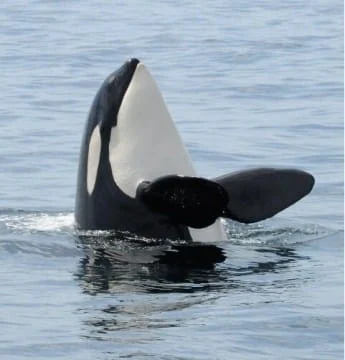
August is an excellent month for orca whale watching on our kayak tours in the San Juan Islands. This orca whale sightings report is from August 2011 and should give a good indication of what to expect this month on our killer whale watching kayak tours in the San Juan Islands, near Seattle, Washington. In most years, San Juan Island orca whale sightings reach their peak in July, continue strong into August, and gradually taper off into October. August is our warmest and driest month of the year in the San Juan Islands, making it ideal for camping and kayaking. It’s also the calmest month – perfect for folks who want to try their first kayak tour and get introduced to this environmentally friendly way of travel and explore the marine world.Orca whales were sighted on over half (54%) of our San Juan Islands kayak trips in August 2011. This is a slight increase from the previous year. Porpoises were seen on 58% of our kayak tours, a slight decrease that is continuing into 2012. Reduced numbers of baitfish such as Pacific herring may be affecting our local porpoises. By combining whales and porpoises, we saw cetaceans on 83% of our San Juan Islands kayak trips. Details from the August 2011 San Juan Islands orca whale watching report: We encountered killer whales on 78% of the camping trips – an improvement from 2010! 5-day San Juan kayak expeditions saw orca whales on 3 of 4 trips. 3-day San Juan kayaking trips had killer whale watching success on 6 of 8 tours. 2-day San Juan Islands kayak tours found the orcas on 5 of 6 trips. Our camping trips saw either Dall’s porpoise or harbor porpoise on 13 of 18 tours for a success rate of 72%. The only four camping trips that missed the orcas were able to enjoy porpoises as their consolation whale. Porpoises are the smallest members of the toothed whale family, so we had 100% success for finding at least one species of cetacean on every kayak camping trip! The 1-day San Juan kayaking trips succeeded in finding killer whales on 40% of the tours. Clearly, spending less time in the orca whales’ habitat results in fewer encounters so we always recommend participating in the longest tour possible to give you the best chances for success. The San Juan Islands of Washington are the best place in the United States for kayaking with killer whales and Sea Quest has the best record of success. Despite being the undisputed experts in our field, we don’t find orca whales on every kayak tour. Killer whales move quickly in pursuit of migrating salmon and are sometimes unpredictable. Bad whale watching luck can occur despite our best efforts. Rarely, rough seas can make spotting whales nearly impossible. Occasionally, we find ourselves on the opposite side of a point or small islet from a pod of orcas, and by the time we get our kayaks around the corner the whales have departing just ahead of us – leaving us with broken hearts. Orca whale watching is no different than other kinds of wildlife watching. If you go to the best location at the best time of year and spend as much time in the whales’ habitat as you can, you will eventually be rewarded! Join a Kayak Quest for Whales from Friday Harbor, Washington Ready to experience it yourself? Explore our 3-Day San Juan Kayak Trip.
Sunset Kayak Tour Made Our Trip to San Juan Islands Spectacular!
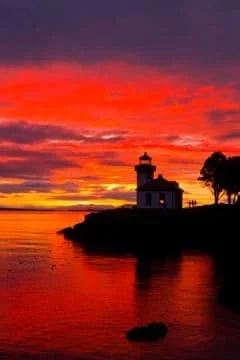
I booked the sunset kayak tour several months ago using the online booking system. The reservation process was seamless and professional. There were a total of six in our party ranging from 30 years of age to 63 – very close family. There was very wide range in athletic ability in our group and body size. Some members of our group could not get in and out of the kayaks without assistance, and many of them were scared to death when we started out. Our guide Pete did an absolutely superb job! The orientation he provided before we set out on the water helped to get everyone as comfortable as possible. He was very polite, very professional, and really upbeat even with the challenges that some members of our group provided him. When we started out, we first saw several Columbia black-tailed deer on the shore as we paddled by. Then we found a pair of bald eagles that were calling to each other and flew out over our heads. There was a juvenile eagle nearby. That show was really awe-inspiring. A bit farther down, we found a harbor seal sun bathing on a rock. All the while, Pete pointed out biological, historical, and just interesting facts about the San Juans, and everything we were viewing from the wildlife to the bull kelp in the water. As we got closer to the turn-around point of our short trip, I spotted what I thought was a dorsal fin of a whale. It turned out to be an orca whale and about 25 of its friends! We watched over the next 20-30 minutes as the whales swam and played as they headed parallel to the shore that we had just paddled up. We saw several flukes tail-slapping the water, spy-hops (raising their head to look around), and one full breach. One of the orca whales spy-hopped no more than 12 feet from our group of kayaks as we huddled together close to the shore to make sure we weren’t in their way. Some of our group members teared up from the absolutely majestic display. I would recommend the sunset kayak trip to anyone. While you shouldn’t expect to always see whales or tons of wildlife, Sea Quest and Pete provided an absolutely professional and fun environment to experience nature in the San Juan Islands. It really was the highlight of our whole trip to the San Juans. Mica LuntPlano, Texas This is an unsolicited review from a participant of our July 15th sunset kayak tour on the west side of San Juan Island in the orca whale waters. Images courtesy of whale-watching captain Jim Maya. Join a Kayak Quest for Orca Whales in the San Juan Islands Plan your own adventure with a 5-Day San Juan Kayak Expedition from Sea Quest.
Orca Whales Prevent Shark Attacks on Kayaks in the San Juan Islands
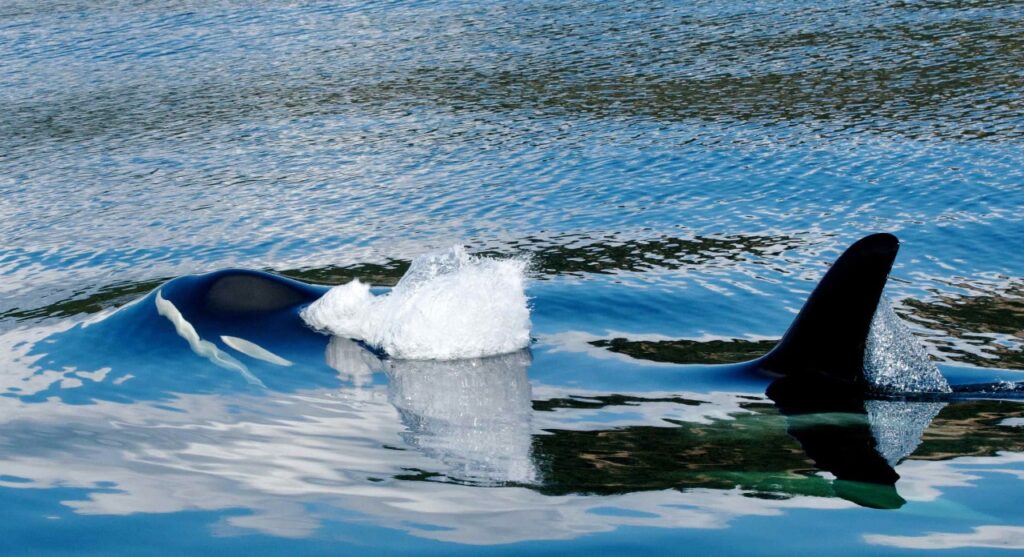
The San Juan Islands would seem to be an ideal habitat for great white sharks, the species infamous for knocking kayak fisherman and surfers into the water off California and Oregon a couple of times each year. Our huge populations of seals and sea lions and cool waters must be very attractive to these apex predators. But to the puzzlement of many, great whites have never been recorded in the San Juan Islands or Salish Sea of Washington. Our theory is that our large population of orca whales keeps great white sharks at bay, hence the title of this blog article “Orca Whales Prevent Shark Attacks on Kayaks in the San Juan Islands”. All 3 types of orcas in Washington are highly motivated to persecute or kill any great white shark that strays into the San Juan Islands. The “offshore” killer whales specialize in eating sharks as a major part of their diet and show extreme teeth wear from chewing through abrasive shark hides. The “transient”/Bigg’s killer whales are known to kill great white sharks and there are some great videos online showing them doing this and eating the huge nutritious liver afterwards. And “resident” killer whales that eat primarily salmon, the orcas we see most often on our kayak tours in Washington, would certainly attack great white sharks with vigor to keep their family pods safe from predation. Who needs shark nets when you’ve got killer whales on patrol protecting the waters?! Here in the San Juan Islands of Washington, we dearly miss seeing basking sharks on our kayak tours. Basking sharks, the 3rd largest species reaching 30 feet in length, were formerly easy to observe as they slowly trawled along the surface for plankton with their giant fins sticking into the air. Orca whales left them alone because they represented no danger to their calves and either tasted badly or were too big to easily kill for food. Harmless basking sharks were common until the 1980’s along the entire west coast but have completely collapsed at the reckless hands of man. Sadly, last year’s aerial survey of British Columbia could not locate a single basking shark! We also used to see vast schools of spiny dogfish sharks in the San Juan Islands. These small 1 meter long sharks were so abundant that they sometimes covered several acres of water as they chased shoals of herring. They were so thick that our quick-handed kayak guides could literally pluck them out of the water bare-handed as they swarmed past the kayaks. Alas, our herring are now depleted by 95% due to spawning habitat destruction in the Salish Sea and the dogfish sharks have died off without a food source. Naturally, many of our San Juan Islands kayak tour guests ask us about the risk of shark attack. We always reply that your chance of winning the lotto and getting hit by lightning in the same day is much higher than getting attacked by a shark. Hollywood movies have unnecessarily created a fearful mindset towards these amazing predators. Only 60 shark attacks occur on average throughout the world in an average year – about a half dozen in the US. Only 4% of shark attacks in the US are fatal. Odds of dying in a motor vehicle or by insect sting are 1000’s of times higher. Humans are killing about 70 million sharks each year, mostly just to turn their fins into soup. These kill rates can’t go on much longer because sharks have a very low reproductive rate. It is estimated that 90% of the large sharks over 2 meters have already been killed. Dozens of shark species are now listed as endangered and entire ecosystems are being severely altered by their wholesale removal. East coast clam and scallop beds are being ravaged by exploding populations of rays that were formerly kept in check by sharks. Coral reef studies show that large sharks prey on mid-sized predators and thereby protect the small fish species that keep the reef healthy by removing smothering algae. And now giant squid populations are exploding in various regions – maybe a good thing for sperm whales, but ask Captain Nemo what he thinks about that! Orca whales are returning to their spring salmon hunting habitat on the west side of San Juan Island right now. Reserve your San Juan Islands kayak tour in the premiere orca whale watching waters today for an experience you will never forget! Join a Kayak Quest for Killer Whales in the San Juan Islands Want to see this firsthand? Join a Half-Day San Juan Kayak Tour. Orcas and sharks cross paths far more directly elsewhere in the world. Researcher Ingrid Visser’s recently published images from New Zealand show killer whales attacking a mako shark — a striking look at just how capable these hunters are.
San Juan Islands Kayaking Tours – Keeping it Pure & Simple!
Being the first company on San Juan Island to provide kayak tours using professional standards, we’ve seen a lot of copy-cat companies pop up over the years. They say that imitation is the sincerest form of flattery so we should take some comfort in all of this mimicry. But we can’t help but feel bad for the folks that end up on kayak tours using sub-standard equipment, poorly trained guides, and no emphasis on the educational opportunities that the marine environment so richly provides. Or worse yet, being sold on a “killer whale watching” kayak tour that visits places like Anacortes where whales are seen only a few times each month. It’s difficult for someone seeking a quality kayaking vacation to sort the wheat from the chaff. Some of these newer kayak tour companies are run by the motorized whale watching industry. While roaring around in their polluting power boats, they saw our kayaking groups silently gliding through the waters and opportunistically jumped into offering kayak trips, too. Kayak tour companies of this ilk are run by people who prefer motors over paddles and offer the kayaking equivalent of “pony rides”. Lacking the knowledge of sound kayaking safety practices and rescue skills, some of these companies have approached us at Sea Quest to train their guides. Other kayak tour companies in the San Juan Islands have morphed into marketing operations for wineries, brewers, yoga schools, etc. Remarkably, there’s even one old codger who leads “booze cruise” kayak tours and still hasn’t figured out that wearing life jackets is an essential requirement of safe kayaking! Here at Sea Quest we are keeping pure and simple. We began as biologists and environmental scientists who were all avid kayakers from the very beginning. Some of us even started kayaking as a way to get access to aquatic environments for research studies. We are all dedicated to spreading the joy of kayaking to as many guests possible and consider it our mission to provide the best educational experience possible within the framework of a kayaking tour. Join us on a “Kayak Quest for Whales” and see if you don’t agree that we are passionate about kayaking, whales, and natural history and strive to provide the utmost quality in every thing we do. Others have certainly noticed – you can read their remarks in the testimonials published on our website. Sea Quest accolades include selection by National Geographic in their “10 Best Trips in the World for 2011” and USA Today’s “World’s Top 10 Adventure Bargains”. And take a minute to watch us kayaking with killer whales in some fantastic videos made for National Geographic TV and ABC News.Reserve your San Juan Islands kayak tour today for an experience you will never forget! Join a Kayak Quest for Killer Whales in the San Juan Islands Turn this into your own trip — book a Family Kayak Tour.